
Educational print materials are the printed pieces schools, colleges, and training organizations use to teach, recruit, and inform: course catalogs, program viewbooks, training manuals, workbooks, event programs, and admissions mailers. If you run a school office, a marketing team, or a training department in Monroe, GA, the question is rarely whether to print. It is which pieces earn their place in a budget, how to spec them, and who prints them well. This guide answers all three, with the research behind why print still works and the production details that keep a job on schedule.
Walton Press has printed for educators, publishers, and businesses in the Monroe area since 1900. What follows draws on that experience and on current reading and enrollment research, so you can plan an educational print project with real numbers instead of guesswork.
Key Takeaways
- Educational print materials include course catalogs, program viewbooks and brochures, training manuals, workbooks, event programs, and admissions direct mail.
- Reading on paper still beats screens for comprehension, and the effect is largest for the informational texts that fill classrooms and training rooms.
- Print is not the whole enrollment funnel, but it reaches roughly one in five prospective students and pushes them toward the next digital step.
- Handwriting on printed workbooks activates memory-related brain networks that typing does not, which is why paper still belongs in learning design.
- Spec choices (paper weight, binding, run length, and mailing) drive both cost and turnaround, so decide them early with your printer.
- A local Monroe, GA printer with offset presses and an in-house bindery can hold color and quality across short and long runs alike.
What Are Educational Print Materials, and Who Uses Them in Monroe?
Educators still trust print for serious learning. In a 2024 survey of about 3,400 United States college faculty by Bay View Analytics, 41 percent said physical textbooks are better for learning than digital ones, even as digital course materials keep growing (Inside Higher Ed). That preference shows up across the full range of printed pieces a school or training group needs.
In and around Monroe and Walton County, the buyers of educational print fall into a few groups:
- K-12 schools and districts that need student handbooks, course catalogs, registration packets, band and theater programs, and fundraising pieces.
- Colleges, technical schools, and universities across the greater Athens and metro Atlanta area that recruit with viewbooks, print search mailers, and orientation guides.
- Corporate and workforce training teams that produce employee handbooks, safety and compliance manuals, and certification workbooks.
- Nonprofits, museums, and continuing-education programs that print class schedules, event programs, and donor materials.
The formats overlap more than most buyers expect. A printed course catalog uses the same bindery skills as a training manual. A program viewbook shares a workflow with a brochure. That is why a single commercial printer can cover the whole list. You can see the range on the Walton Press education and book printing page.
Why Printed Materials Still Improve Learning
Yes, students read and retain more from paper. A 2018 meta-analysis of 54 studies covering more than 170,000 readers found that reading comprehension is reliably better on paper than on screens, with an overall advantage of Hedges g equal to negative 0.21 in favor of print (TUM Center for Educational Technologies summary of Delgado et al.). The researchers found the gap was largest for informational, expository texts read under time pressure, which describes most textbooks, study guides, and training documents.
Memory of structure also holds up better on paper. In a controlled study published in Frontiers in Psychology, 50 adults read the same 28-page text either as a print pocketbook or on a Kindle, and the print readers were significantly better at reconstructing the order of events afterward (Mangen et al., 2019). For material where sequence matters, a lab procedure, a historical timeline, a step-by-step process, that temporal recall is exactly what you want a learner to keep.
The practical takeaway is simple. Print does not replace digital, and it should not try to. It earns its place for the deep-reading, high-stakes content where comprehension and recall matter most. Here is how the two media compare for common classroom tasks:
| Task | Print strength | Screen strength |
|---|---|---|
| Deep reading of long, informational text | Higher comprehension and recall | Search and quick reference |
| Studying under time pressure | Fewer distractions, better focus | Instant updates |
| Following a sequence or procedure | Stronger memory of order | Embedded video or links |
| Annotating and note-taking | Handwriting aids encoding | Easy copy and share |
Print and Handwriting: Why Workbooks Beat Screens for Retention
Writing on paper does something typing cannot. A 2024 high-density EEG study of 36 university students found that writing by hand produced widespread brain connectivity across parietal and central regions, patterns the authors describe as important for memory formation and learning, while typing on a keyboard did not (Van der Weel and Van der Meer, Frontiers in Psychology). In other words, the act of filling in a printed workbook helps encode the lesson, not just record it.
That is the case for keeping printed workbooks, lab sheets, and fill-in study guides in your program, even when the reading lives online. Training teams see the same benefit. A printed certification workbook or safety manual that a technician marks up on the floor sticks better than a slide deck skimmed once. Walton Press produces these pieces alongside training manuals and employee handbooks for corporate and workforce programs, with binding that survives daily handling.
Using Print to Recruit Students and Fill Programs
Print still reaches prospective students, so treat it as an activation channel, not a relic. In the 2025 RNL E-Expectations Trend Report, 22 percent of college-bound students named printed materials in the mail as one of the best ways for a college to follow up after they inquire, and 17 percent said they first found a college’s website through something printed (RNL 2025, hosted on ERIC). Print is not the top channel in that report, and no honest printer will tell you it is. What it does reliably is reach about one in five prospects and push them toward the next digital step.
Physical mail also lands with less effort and sticks in memory longer. A Canada Post neuromarketing study measured with eye tracking and brain imaging found that physical media requires 21 percent less cognitive effort to process than digital media and drives 70 percent higher brand recall (Canada Post). For an admissions office, that means a well-designed viewbook or search mailer earns attention that a fifth follow-up email will not.
Print vs digital
What physical materials do that screens do not
Measured with eye tracking and brain imaging, plus faculty preference.
Canada Post neuromarketing study; Bay View Analytics survey of ~3,400 US college faculty (2024) via Inside Higher Ed.
A few pieces do most of the recruiting work:
- Viewbooks and program brochures that tell the story a website cannot fit on one screen. Walton Press prints these through its brochure printing service.
- Search and inquiry mailers sent through targeted direct mail services, which handle addressing, postal sorting, and drop coordination.
- Printed course catalogs that parents and adult learners keep on the counter, produced as printed catalogs.
- Event and graduation programs for open houses and commencements, available as event programs.
Specs, Paper, and Turnaround for Educational Projects
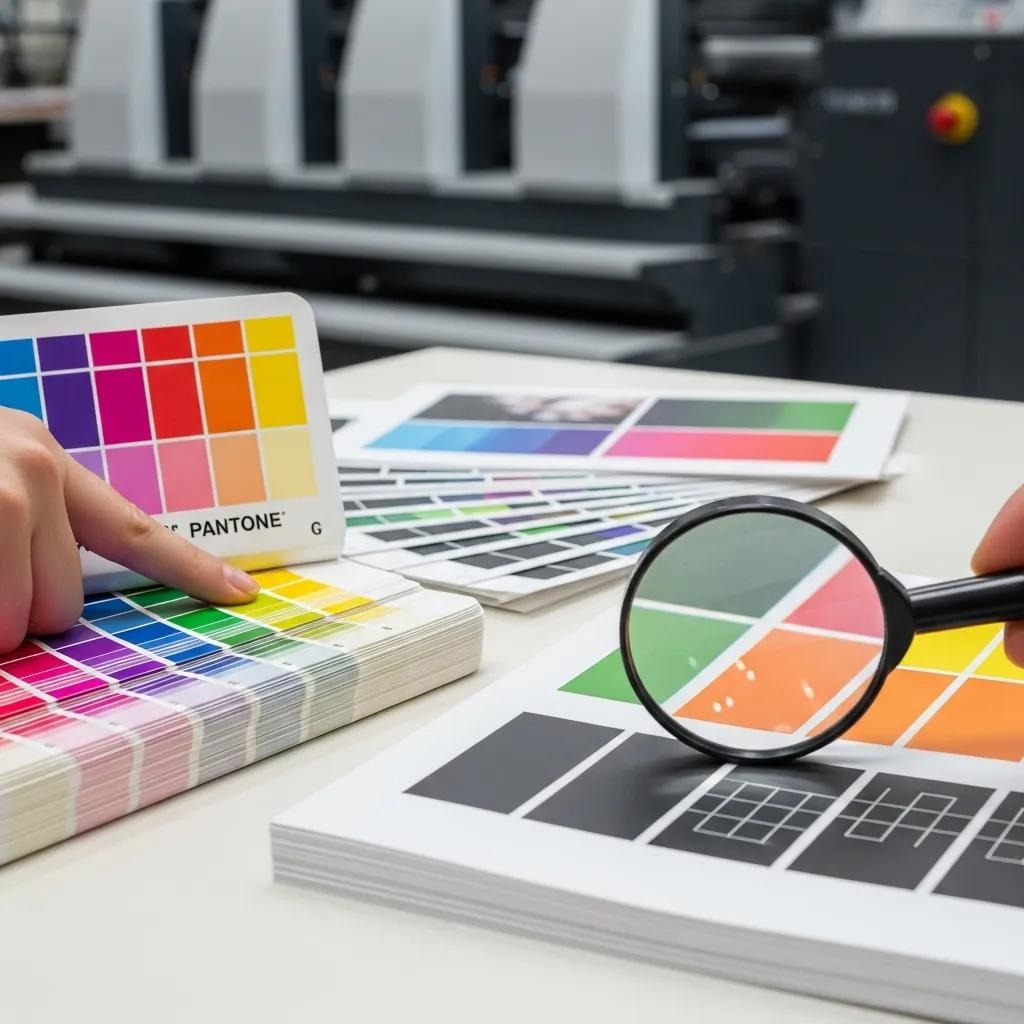
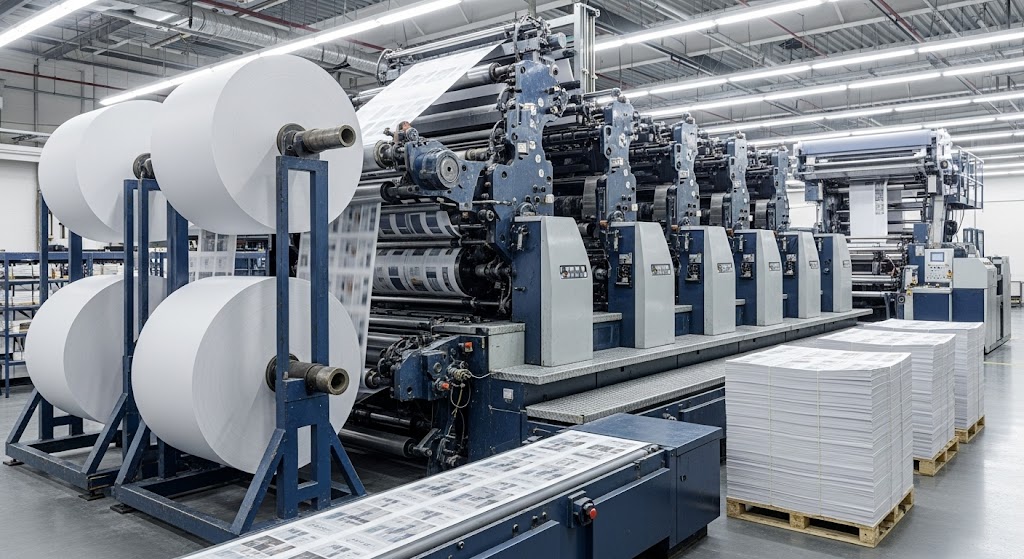
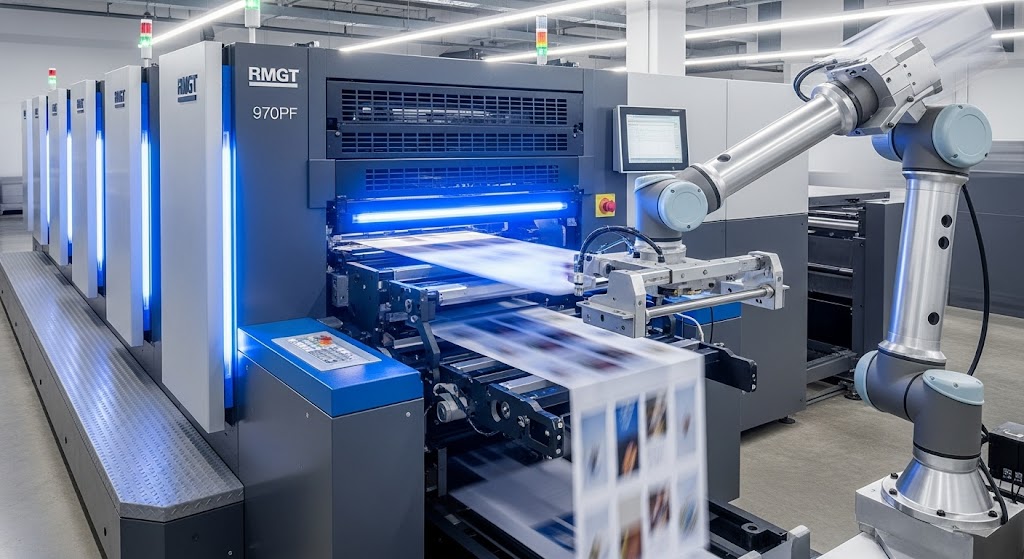
Get the specs right early, because they set both the price and the schedule. Walton Press runs sheetfed and web offset presses with a full in-house bindery and holds Idealliance G7 Master certification, which keeps color consistent from the first sheet to the last and across reprints. Those production facts translate into a short list of decisions every education buyer should make up front.
- Run length. Offset printing is the economical choice once volumes climb into the thousands, which fits district-wide handbooks, catalogs, and large mailings. For long runs, offset printing lowers the cost per piece without giving up color quality.
- Paper weight and finish. A viewbook wants a heavier cover and a coated stock to feel substantial. A workbook wants an uncoated text stock that takes pen and pencil. Tell your printer how the piece will be used and let the stock follow.
- Binding. Saddle-stitch suits thin catalogs and programs. Perfect binding gives manuals and thick catalogs a flat spine. Hardcover case binding fits keepsake yearbooks and reference volumes. An in-house bindery keeps all three under one roof and on one timeline.
- Mailing and fulfillment. If the piece ships to homes or campuses, plan addressing, sorting, and postage into the schedule from the start. Combining print and mail under one vendor removes a handoff and a week of delay.
- Turnaround. Build in time for proofing. A G7-calibrated proof you approve before the run prevents the costliest kind of reprint, the one you did not budget for.
Deciding these five items in the first conversation, rather than after design, is the single best way to keep an educational print project on time and on budget.
Choosing an Educational Printer in Monroe, GA
Pick a printer who can prove color control and handle the whole job in-house. The pieces that matter most, a viewbook that represents your brand or a catalog thousands of families will read, are not the place for a vendor that outsources bindery or guesses at color. Look for offset capacity, an in-house bindery, a color management certification like G7, and direct mail under the same roof. When one partner owns printing, finishing, and mailing, you get one schedule, one point of contact, and fewer surprises. For a deeper checklist, Walton Press published a guide on how to choose a commercial printing partner.
Walton Press has served Monroe, GA and the surrounding region since 1900, printing for schools, colleges, publishers, and training teams. To scope a course catalog, viewbook, manual, or admissions mailing, reach the team at 1 800 354 0235, email info@waltonpress.com, or use the contact page. The shop is at 402 Mayfield Drive, Monroe, GA 30655.
Frequently Asked Questions
What are educational print materials?
They are the printed pieces schools and training organizations use to teach and recruit: course catalogs, program viewbooks and brochures, student handbooks, training and safety manuals, workbooks, event and graduation programs, and admissions direct mail. Most share the same presses and bindery, so one commercial printer can produce the full set.
Is print still worth it when everything is digital?
Yes, for the right pieces. Research shows comprehension is measurably higher on paper for informational texts, and printed mail still reaches about one in five prospective students and drives them to act. Print works best paired with digital, not as a replacement for it.
What is the most economical way to print a large catalog or handbook run?
Offset printing. Once quantities reach the thousands, offset lowers the cost per piece while holding color quality, which makes it the standard choice for district handbooks, course catalogs, and large mailings. Shorter runs may fit digital printing instead, so share your quantity early.
Can one printer handle both printing and mailing an admissions campaign?
Yes. A full-service commercial printer with direct mail services can print the viewbook or mailer, address and sort it for postage, and coordinate the drop, which removes a handoff and shortens the schedule.
Do you serve schools outside Monroe, GA?
Walton Press prints for education and training clients across the greater Athens and metro Atlanta region and ships nationally when a project calls for it. Local pickup and consultation are available in Monroe.