If you publish a magazine in metro Atlanta, your printer is a production partner, not a vendor. The right one protects your color across a year of issues, keeps the press schedule honest, and drops a polybagged copy in a subscriber’s mailbox without a postage surprise. Walton Press has printed for Georgia publishers since 1900, and this guide lays out how a magazine actually gets made, so you can brief a printer with confidence and compare quotes on the things that matter.
Key Takeaways
- Atlanta is the sixth-largest metro in the country, so an in-state printer near the market gives you short proof turnarounds and easy press-check drives.
- Match the press to the circulation: sheetfed offset for niche and regional titles, web offset for high-volume runs.
- G7 Master Certification is the practical reason issue 12 looks like issue 1, calibrated gray balance holds your brand color run to run.
- Binding (perfect vs saddle stitch), stock, and finishing decide how the magazine feels and what it costs to mail.
- Printing and mailing under one roof means inkjet addressing and postal optimization happen on the same floor, not in a handoff.
Where can Atlanta publishers get magazines printed?
Metro Atlanta became the sixth-largest metropolitan area in the United States in the Census Bureau’s Vintage 2025 estimates, adding nearly 62,000 residents in a single year according to the Atlanta Regional Commission. That growth feeds a dense publishing scene: city and lifestyle titles, chamber and association magazines, university and hospital publications, real-estate and HOA books, and custom-content magazines for brands. The region’s economy employs 3,136,200 people as of June 2025 per the Bureau of Labor Statistics, and plenty of those payrolls sit behind a masthead.
You do not have to print inside the city limits to serve the Atlanta market well. Walton Press runs its plant in Monroe, about 50 miles east of downtown, close enough for a courier proof or an in-person press check and far enough to keep overhead off your unit cost. The shop has produced magazines for Atlanta publishers for years, including Simply Buckhead, a hybrid lifestyle title based in the heart of the metro. For a publisher weighing a local magazine partner, the deeper companion to this piece is our magazine printing guide for Monroe, GA publishers.
Which printing method fits your magazine’s circulation?
Circulation decides the press, and getting that call right is where a publisher saves real money. The printing industry nationally runs on 335,800 employees across 27,291 establishments as of 2026 Bureau of Labor Statistics data, and those shops split into two camps for periodicals: sheetfed offset and web offset. Walton Press keeps both, so the recommendation follows your run length instead of the equipment on hand.
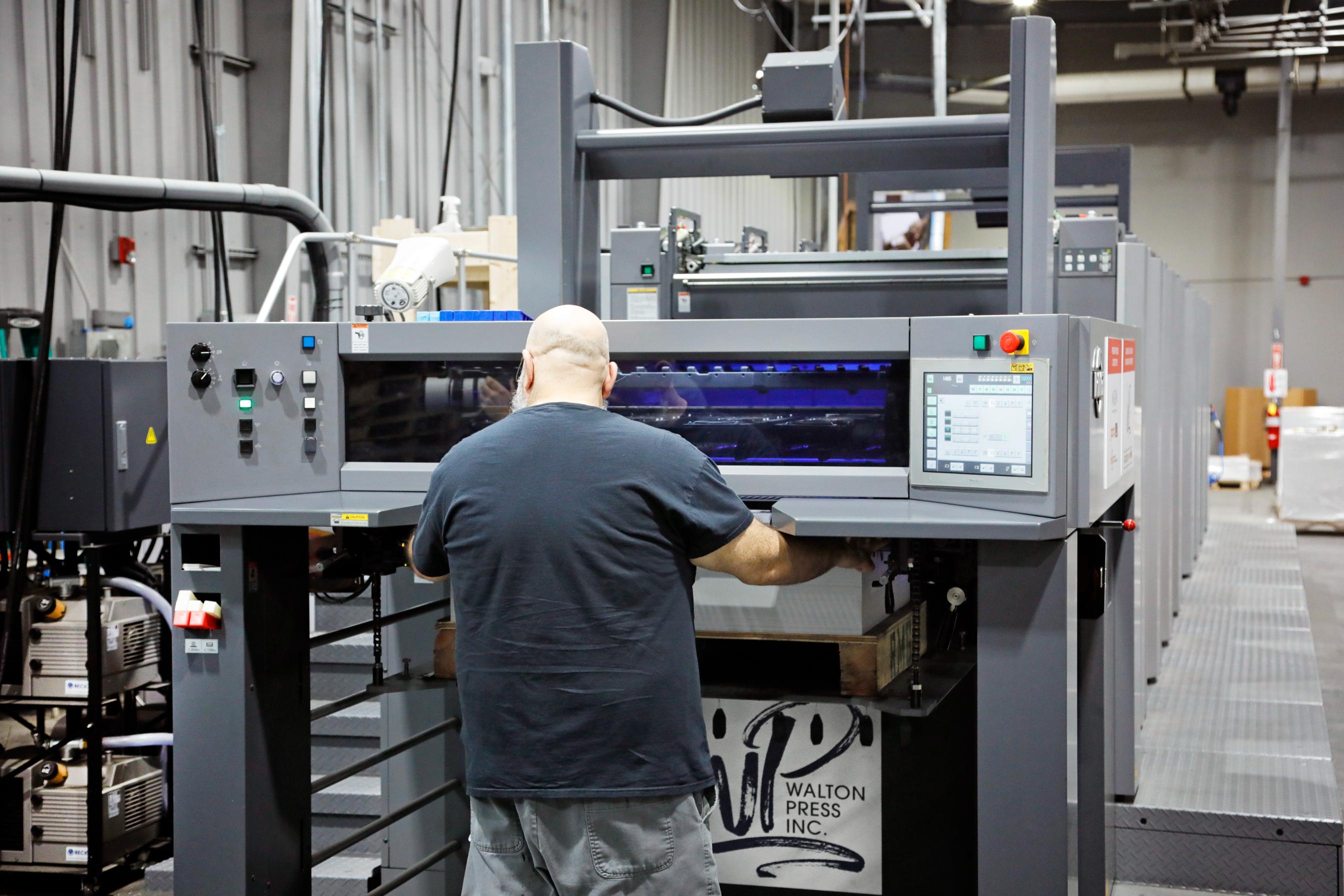
Sheetfed offset prints onto cut sheets and shines on short-run and niche titles, premium covers, and heavier stocks. Walton Press added an eight-up RMGT 970PF LED long perfector, a 38-inch press that prints both sides in one pass at up to 15,000 sheets an hour, with LED instant-curing and dual-camera color control for registration you can trust page to page. Because it runs four up on a 25-by-38-inch sheet, runs as short as a few hundred copies print more economically on it than on a digital press. That makes it a strong fit for regional and association magazines that print quarterly or monthly in the low thousands.
Walton Press at a glance
The plant behind an Atlanta magazine run
Figures from this guide.
Source: Walton Press.
Web offset feeds a continuous paper roll and is built for high-volume circulations, the big consumer and membership titles that ship tens of thousands of copies. If your run climbs into that range, web offset drives the per-copy cost down. The honest version of this conversation sorts your title into the right lane; our breakdown of sheetfed versus web offset walks through the trade-offs in detail.
How does G7 color certification keep every issue consistent?
The single most common complaint publishers have about a new printer is that the color drifts: the autumn issue runs warm, the next one runs cold, and the brand’s signature teal looks like three different colors across a volume. Walton Press is an Idealliance G7 Master Certified printer, which is the practical answer to that problem. G7 is a calibration method that locks gray balance and tone curves to a shared standard, so a file proofed in spring prints to the same numbers in winter.
For a magazine, that consistency is the product. Advertisers expect their logo to reproduce the same way it did last quarter, and a cover photograph has to match the proof you approved. G7 certification is not marketing language here, it is a measurable gray-balance target that the pressroom hits on every run. When you evaluate an Atlanta-area printer, ask whether the color standard is certified and audited or simply promised. The difference shows up on issue 12.
What binding and finishing options do magazines need?
Binding is the first physical decision, and it sets both the feel of the magazine and part of its mailing cost. Perfect binding glues the pages into a square spine and suits thicker books, premium titles, and anything that needs a printable spine for a newsstand or a shelf. Saddle stitching staples folded sheets along the fold and works for thinner issues, program books, and inserts, where it is lighter and less expensive. Walton Press offers both, along with a full range of paper stocks and finishes for the covers and body.
From there the finishing choices shape the reader’s first impression. A glossy, coated cover photographs and ships well. An uncoated or matte interior reads as editorial and premium. Polybagging protects the issue in the mail and lets you insert a card, a renewal notice, or a sponsor’s sample. These are not cosmetic details, they influence newsstand pull, perceived value, and what a subscriber feels when the issue lands. If your publication is really a catalog or a hybrid book, the same bindery handles publication printing and printed catalogs on the same equipment.
How do you mail a magazine without overpaying on postage?
Postage is often the largest line item in a magazine’s budget, larger than the printing itself, so the mailing side deserves as much attention as the press. The United States Postal Service moved 108.7 billion mailpieces in fiscal year 2025, and magazines travel through its Periodicals class, which rewards publications that are presorted, correctly addressed, and prepared to postal specifications. Small errors in the mail file quietly inflate the bill.
Walton Press handles addressing and mailing in-house, so printing and mailing happen under one roof rather than in a handoff between two vendors. The shop prepares the mailing list, applies inkjet addressing, and runs postal optimization to qualify your drop for the best available rates, then tenders the issue to the Postal Service. Keeping the files on one floor also protects subscriber data and shortens the path from bindery to mailbox. For publishers who also run renewal campaigns or sponsor inserts, the same team supports direct mail services and mailing and fulfillment around the core magazine.
What to bring to your first printer conversation
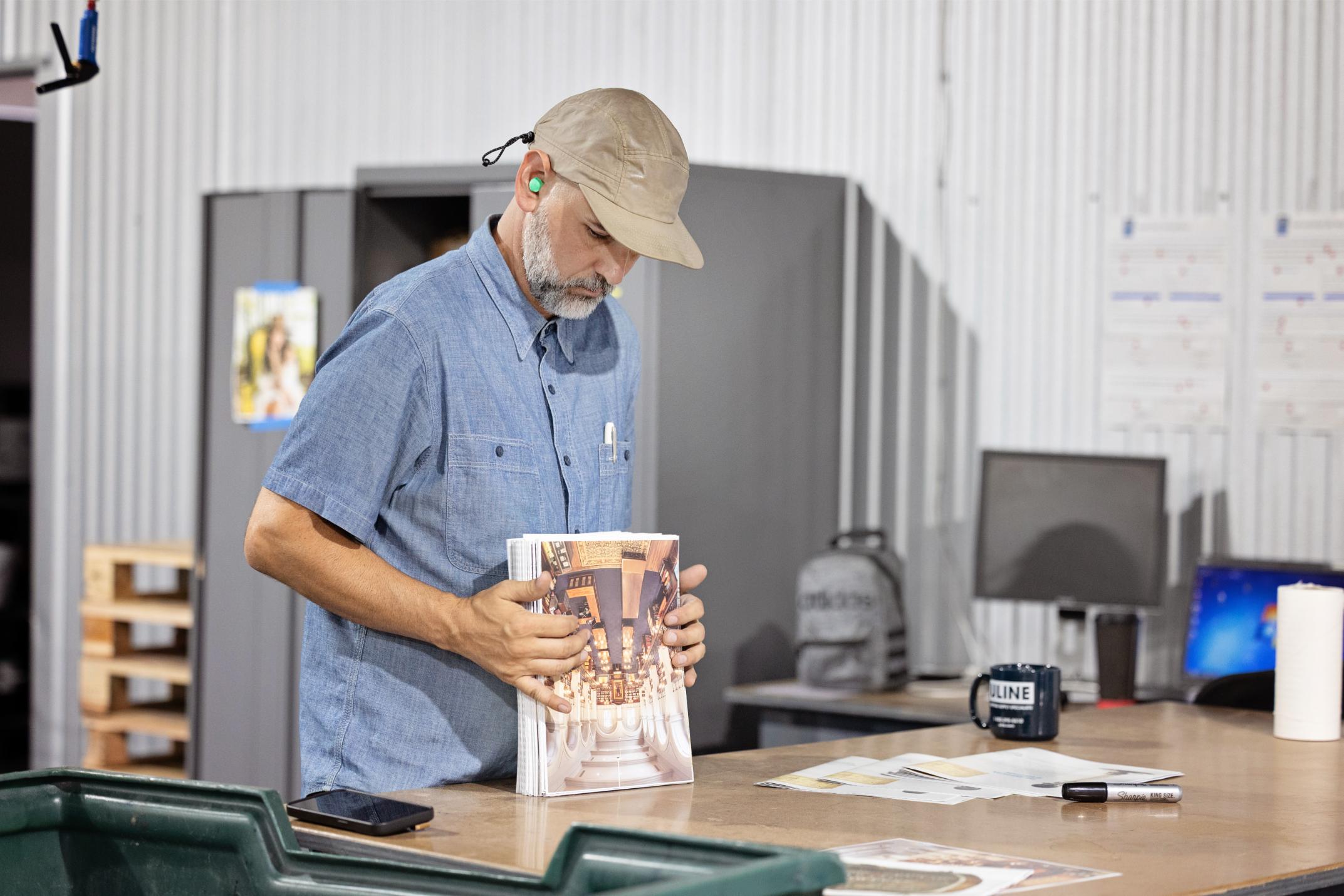
A good quote starts with a clear spec. Before you reach out, gather your trim size, page count, cover and text stock preferences, binding style, print quantity, issue frequency, and your mailing list size and format. Share a past issue if you have one, it tells a printer more than a spec sheet can. If you are launching a new title, a printer should help you right-size those choices against your budget rather than quoting the most expensive version of every option.
When you are ready to compare real numbers against your publication, contact Walton Press with your specs and mailing details for a quote built around your actual title.
Frequently Asked Questions
Does a magazine printer need to be inside Atlanta?
No. A printer within driving distance of the metro gives you the benefits that matter, fast proofs, the option of an in-person press check, and quick delivery, without paying for in-town real estate in your unit cost. Walton Press serves Atlanta publishers from Monroe, about 50 miles east of downtown.
Should my magazine be perfect bound or saddle stitched?
It depends on page count and positioning. Perfect binding suits thicker, premium books and anything that needs a printed spine. Saddle stitching is lighter and more economical for thinner issues and program-style publications. A printer can model both against your page count and mailing weight.
What is G7 certification and why does it matter for a magazine?
G7 is an Idealliance calibration standard that locks gray balance and tone reproduction to shared targets. For a magazine it means color stays consistent issue to issue, which protects your brand and reassures advertisers that their artwork reproduces the same way every time.
Can the printer handle mailing, or do I need a separate mail house?
Walton Press addresses and mails in-house, so printing, inkjet addressing, postal optimization, and the mail drop happen with one team. That removes a vendor handoff and keeps subscriber data on a single floor.
What run sizes make sense for offset versus digital?
Short regional and association magazines in the low thousands often print most economically on a sheetfed offset press, which runs cost-effectively down to a few hundred copies. High-volume consumer titles move to web offset. The right lane depends on your circulation, and a printer should recommend based on your numbers.
About the author: The Walton Press team has produced magazines, catalogs, and publications for Georgia publishers since 1900. Walton Press is an Idealliance G7 Master Certified commercial printer based at 402 Mayfield Drive, Monroe, GA 30655. Reach the team at 1-800-354-0235 or info@waltonpress.com.