Presentation folders are branded pocket folders that hold and present a company’s sales materials under one professional cover. In Georgia, they are ordered by sales teams, agencies, universities, hospitals, and corporate marketing departments that need a clean way to hand over a proposal, a media kit, or an onboarding packet. This guide walks through the choices you make when you order them, how they are printed, what belongs inside, and how to prepare your files for a Georgia printer. Walton Press has printed collateral like this from Monroe since 1900.
Key Takeaways
- A presentation folder is a branded pocket folder for proposals, sales kits, and media kits. The four decisions that shape it are pocket layout, business card slits, card stock, and finish.
- Georgia logged 21,619 business applications in October 2026 alone, and every new brand eventually needs a consistent way to present itself in person.
- Color consistency is the hardest part to get right. A G7 calibrated printer keeps your logo and brand colors matching across every reprint.
- Sell sheets, brochures, and business cards are the inserts that turn an empty folder into a working sales tool.
- Walton Press prints presentation folders in Monroe, GA and serves businesses statewide. Files upload through its InSite portal, and every job starts with a quote.
What are presentation folders, and who orders them in Georgia?
Presentation folders are rigid pocket folders, printed and die-cut so they hold loose sheets, a business card, and sometimes a brochure behind a single branded cover. Georgia is a strong market for them because new companies keep forming here. The U.S. Census Bureau’s Business Formation Statistics program, mirrored by the Federal Reserve, recorded 21,619 business applications in Georgia in October 2026 alone, on a seasonally adjusted basis. Each of those brands eventually sits across a table from a prospect and needs something better than a loose stack of paper.
The buyers are predictable. Walton Press describes its presentation folders as the carrier for sales kits, press materials, and business proposals. A real estate brokerage uses them for listing packets. A manufacturer hands them to buyers at a trade show. A university puts them in a recruiting kit. The folder does two jobs at once: it protects the documents, and it makes the first impression before anyone reads a word.
Who orders them
Georgia's demand for presentation folders
New businesses forming in Georgia, and the sales force that hands folders out.
U.S. Census Bureau Business Formation Statistics (via FRED); U.S. Bureau of Labor Statistics.
What options do you choose when ordering presentation folders?
The four decisions that shape every folder are pocket configuration, business card slits, card stock, and finish. Get those right and the rest is artwork.
Pocket configuration comes first. A single right-hand pocket is the lean option for a short proposal. Dual pockets let you separate a cover letter from supporting sheets, or pricing from case studies. Walton offers a range of pocket configurations so the folder fits how your materials are organized, not the other way around.
Business card slits are small diagonal cuts, usually on the right pocket, that hold a card at an angle. They look minor and they are not. A card that stays put means the prospect leaves the meeting with your name and number already in hand.
Card stock is the body of the folder. A heavier cover stock stands up to being carried, mailed, and shuffled without creasing at the spine. Walton builds its folders from sturdy card stocks for exactly that reason, since a folder that arrives dog-eared undercuts the message inside it.
Finish is the last decision and the most visible. A gloss coating makes photography pop, a matte or soft finish reads as understated and premium, and a laminate adds the most protection against fingerprints and scuffs. Walton finishes its folders with premium options that keep them both durable and impressive. The standard format holds letter-size inserts, which keeps your sell sheets and proposals easy to produce and easy to refill.
How are presentation folders printed, and why does color matter so much?
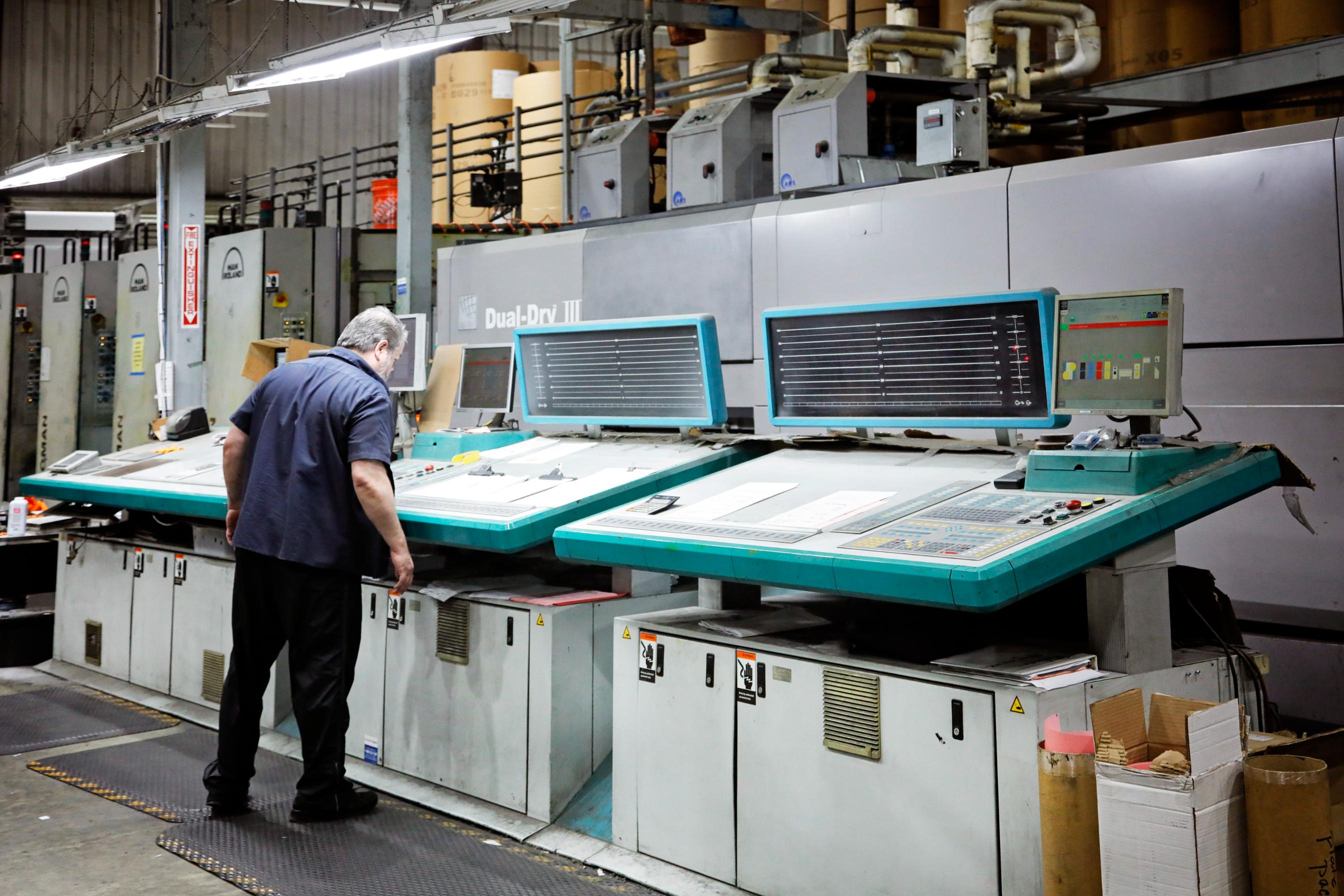
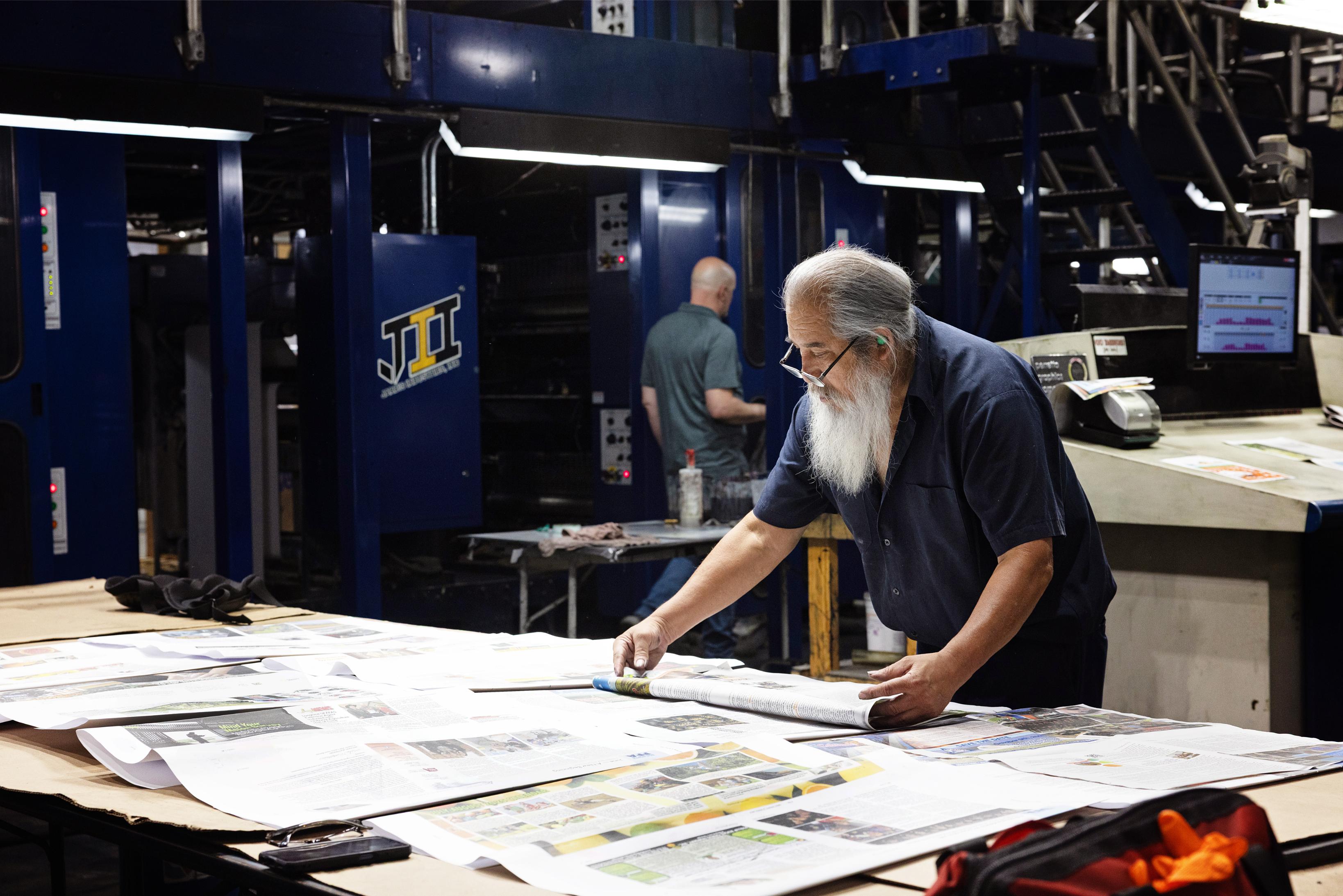
Most presentation folders are printed on an offset press, then die-cut, scored, glued, and sometimes coated. Offset is the right process for the heavy cover stocks folders need and for the color consistency that brand work demands. Short, fast-changing runs can go digital, but once you are printing a meaningful quantity on thick stock, offset usually wins on both quality and unit economics.
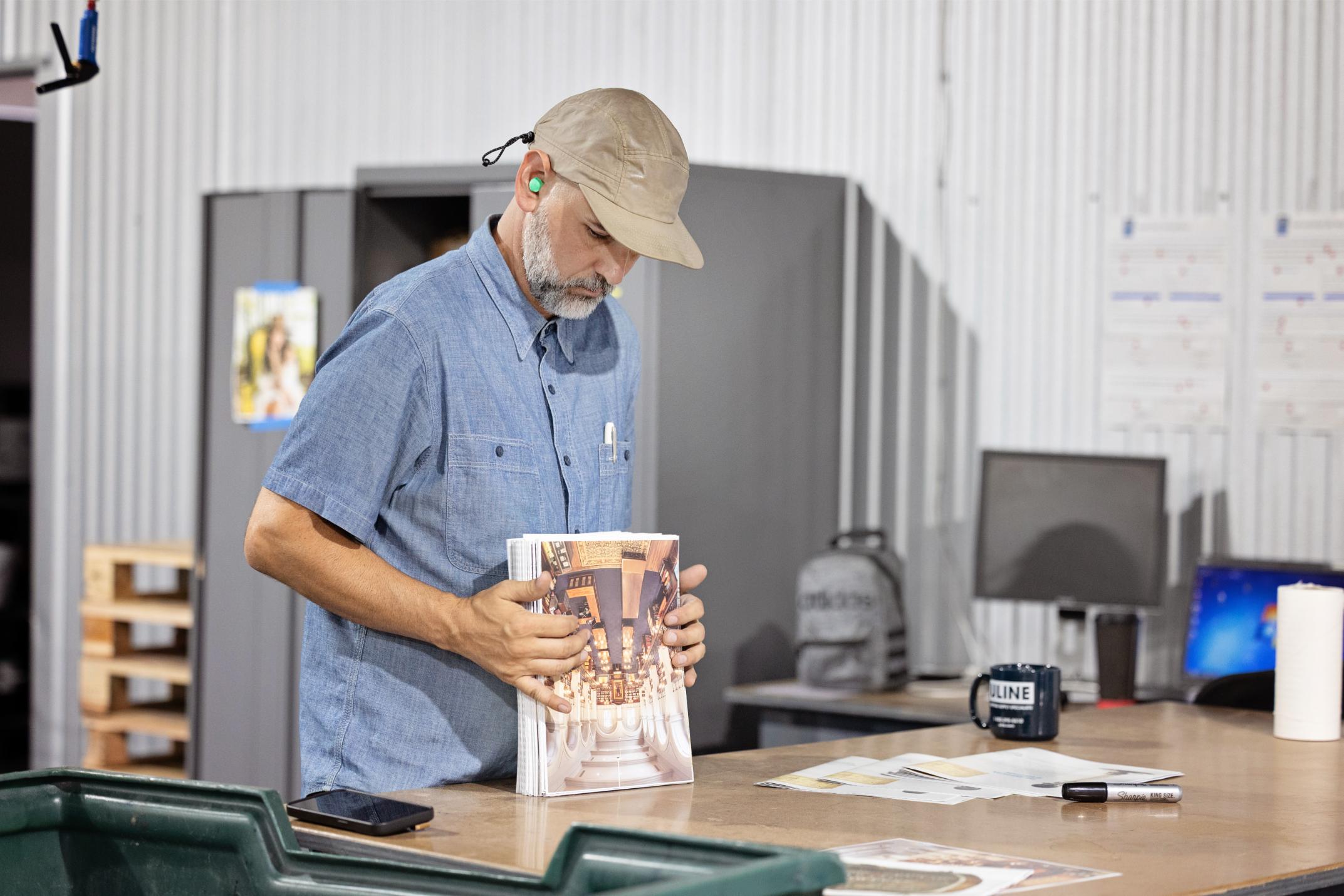
Color is where most folder orders quietly go wrong. Your logo blue has to be the same blue this quarter, next quarter, and on the matching sell sheets tucked inside. That consistency is not luck. It comes from calibration. G7 is a grayscale calibration method, administered through the PRINTING United Alliance and Idealliance, that locks in gray balance and tone so a press can, in their words, “achieve and maintain G7 grayscale calibration.” Walton Press carries the G7 Master Targeted qualification, which is why a folder it prints today will match one it prints a year from now from the same files.
Ask any printer you are evaluating how they control color across reprints. If the answer is a calibration standard and a documented process, you are in good hands. If the answer is a shrug, your brand colors will drift.
What goes inside a presentation folder?
The folder is only the cover. The inserts do the selling, and they should match the folder in stock and color so the whole kit feels like one piece.
Sell sheets are the workhorse. Walton describes a printed sell sheet as “an essential sales tool, providing a concise, visually appealing overview of a product, service, or special offer,” built for use “as trade show handouts, leave-behinds, or additions to a presentation folder.” One sheet per product or service keeps the kit modular, so a rep can build the right folder for the right meeting.
Brochures carry the longer story. A tri-fold or bi-fold brochure fits a pocket cleanly and gives you room for the narrative a single sheet cannot hold. Add a business card in the slits, a cover letter on letterhead, and a proposal, and the folder is complete. Printing the inserts and the folder at the same shop is the simplest way to keep the paper, the coating, and the color aligned across every piece.
How do Georgia sales teams actually use presentation folders?
Folders earn their keep in the hands of salespeople, and there are a lot of them. The U.S. Bureau of Labor Statistics counts roughly 1,571,400 wholesale and manufacturing sales representatives working nationwide in 2025, with about 123,400 openings projected each year through 2035. These are the people who walk into a buyer’s office, open a laptop, and then leave something physical behind. The folder is what stays on the desk after the meeting ends.
Beyond the field sales call, the same folder shows up across a company. Marketing teams build media and press kits. HR drops onboarding and benefits packets into them for new hires. Finance assembles investor and proposal packages. Walton’s work for corporate buyers spans exactly these uses, and its guide to corporate print materials in Monroe covers how the folder fits alongside handbooks, sell sheets, and direct mail in a full collateral system.
How to set up files and order presentation folders from Walton Press
Start with the dieline, supply press-ready files, and confirm the spec before you print. The U.S. printing industry still runs on skilled local shops: the Bureau of Labor Statistics counts about 335,800 printing employees in October 2026, spread across roughly 27,291 establishments, and a Georgia shop you can call and visit removes most of the risk from a color-critical job.
File setup is straightforward once you have the template. Build your artwork on the printer’s dieline so pockets, slits, and fold scores land in the right place. Add bleed where color runs to the edge, keep live text inside the safe area away from folds and cuts, and export a press-ready PDF in CMYK rather than RGB so the color you approve is the color that prints. At Walton Press, finished files upload through the InSite portal at insite.waltonpress.com, which keeps versions organized and reprints easy to pull.
When you are ready, request a quote and ask for a sample kit so you can feel the stock and finish before you commit a full run. You can reach the shop at 1-800-354-0235, or through the contact page, to start a presentation folder order or to talk through options on an existing brand kit. Walton Press is at 402 Mayfield Drive, Monroe, GA 30655, and prints for businesses across the state.
Frequently Asked Questions
What size are standard presentation folders?
The most common format is a nine by twelve inch folder sized to hold letter-size inserts, meaning your standard 8.5 by 11 inch sell sheets and proposals slide in without trimming. Custom sizes are possible, but the standard format keeps your inserts easy to produce and refill.
Can Walton Press print presentation folders for delivery across Georgia?
Yes. Walton Press prints in Monroe, between Atlanta and Athens, and serves businesses statewide. Finished folders can ship anywhere in Georgia, and files are handled remotely through the InSite upload portal, so you do not need to be local to order.
What is the difference between offset and digital printing for folders?
Offset is the usual choice for folders because it handles heavy cover stocks and holds color consistently across a run, which matters for brand work and larger quantities. Digital suits very short runs or fast turnarounds where setup cost outweighs the per-piece savings of offset. A printer can advise which fits your quantity.
How do I keep my brand colors consistent across reprints?
Work with a G7 calibrated printer and supply CMYK files built to the printer’s profile. G7 grayscale calibration keeps gray balance and tone steady from one run to the next, so the folder you print this year matches the one you print next year from the same files.
What should I put inside a presentation folder?
A sell sheet for each product or service, a brochure for the longer story, a business card in the slits, and your proposal or cover letter. Printing the inserts and the folder at one shop keeps the stock, coating, and color aligned so the kit reads as a single, deliberate piece.