Event program printing in Monroe, GA is the production of the printed booklets, folded sheets, and playbills that guests hold during a ceremony, gala, conference, or performance. A good program does real work. It carries the schedule, the speaker bios, the order of service, the sponsor thank-yous, and the map that keeps a room moving on time. Walton Press has printed this kind of material for Georgia organizers since 1900, and this guide walks through what goes into a program that looks as considered as the event it represents.
Key Takeaways
- An event program collects the schedule, bios, and recognitions attendees need into one printed piece they keep during the event.
- Booklet programs are usually saddle-stitched for shorter page counts and perfect-bound when the page count grows.
- Color consistency depends on how the press is controlled. Walton Press runs closed-loop color control on its offset presses, correcting ink in real time so sponsor and brand colors hold across the run.
- Send your event date early, upload print-ready files through the InSite portal, and request a sample kit before you commit.
What Event Program Printing Includes
The United States employed 172,100 meeting, convention, and event planners in 2025, and the Bureau of Labor Statistics projects that occupation to grow 6 percent through 2035, faster than the 3 percent average for all jobs (U.S. Bureau of Labor Statistics). More planned events means more moments where a printed program is the first thing a guest touches when they sit down.
At its core, a program is a wayfinding and recognition tool. It answers three questions fast: what happens next, who is presenting, and who made the event possible. The physical format follows the content. A one-night awards dinner might use a single folded sheet. A weekend conference or a theater season often needs a multi-page booklet with an agenda grid, headshots, and advertiser pages.
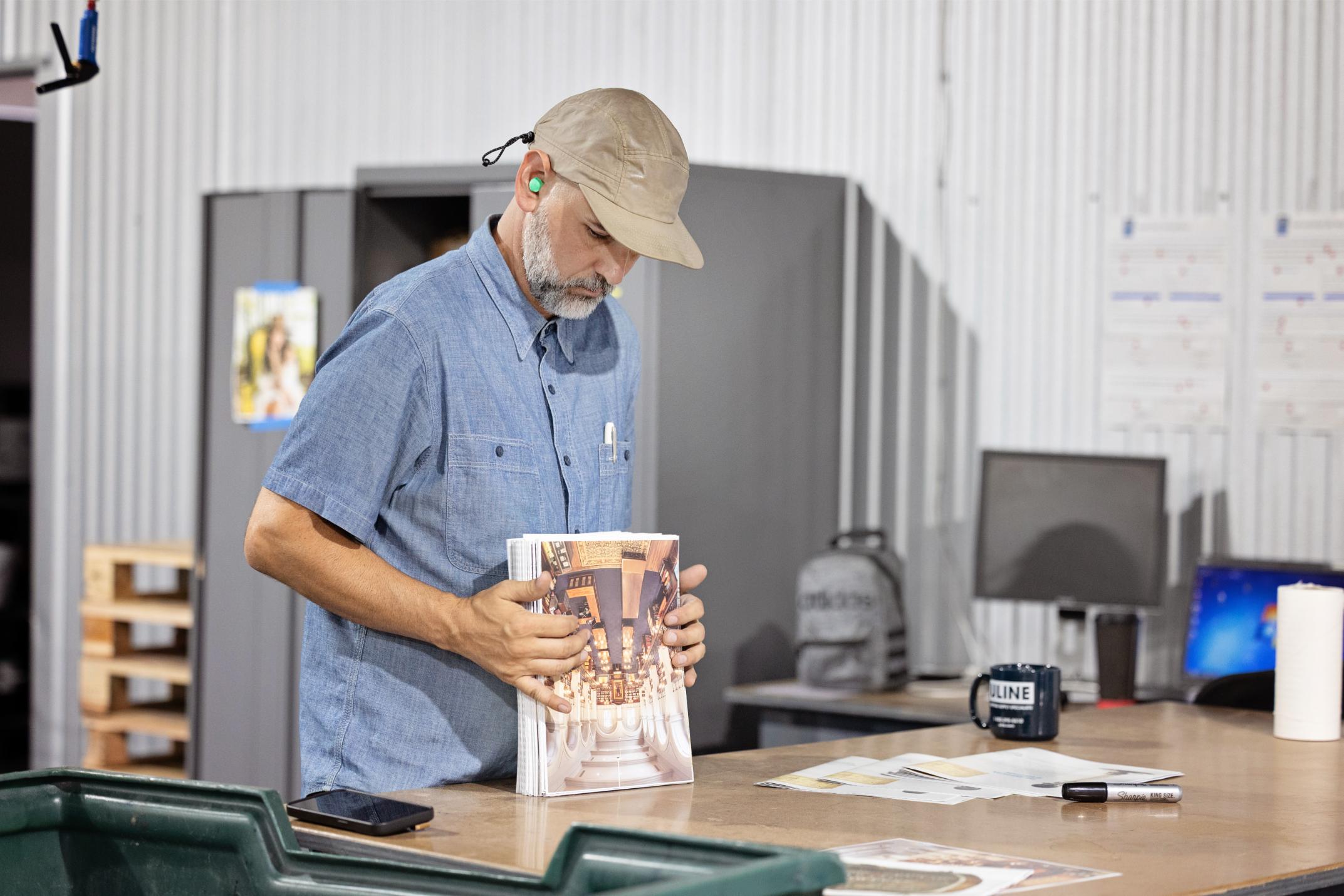
Walton Press accommodates custom sizes, multi-page layouts, and a range of paper types, and finishes programs with saddle-stitching or perfect binding to match the tone of the event. Common local uses include commencement ceremonies, church and memorial services, chamber galas, festival guides, playbills, and corporate award nights. Each of those has its own rhythm, and the print spec should reflect it rather than force every job into one template.
Why Monroe and Georgia Event Hosts Still Print Programs
Georgia drew more than 17 million domestic business and convention visitors in 2024, part of a visitor economy that generated $82 billion in statewide economic impact and supported 470,570 jobs (Georgia Department of Economic Development). Business and convention travel alone accounted for $4.6 billion in direct spending that year, up 5.5 percent over 2023. Behind those numbers are thousands of meetings, ceremonies, and ticketed events, and a printed program is still the calm, screen-free reference guests reach for during each one.
Monroe and the wider Walton County calendar carry their share of this activity: downtown festivals, school and college ceremonies, nonprofit fundraisers, and performances that all seat a room full of people who need to know what is coming next. A phone can hold the same schedule, but a program does not dim, buzz, or ask anyone to unlock it mid-ceremony. It also outlives the event as a keepsake, which matters for a graduation or a milestone gala.
Georgia's event economy
Georgia's business and convention travel in 2024
Business and convention travel is a large and growing slice of the state's visitor economy. Each of those meetings, ceremonies and conferences is a room that may hand out a printed program.
17 million+
domestic business and convention visitors to Georgia in 2024
$4.6B
direct spending from business and convention travel that year, up 5.5% over 2023
$82B
total statewide economic impact of Georgia's visitor economy
For hosts in hospitality and tourism, the program is part of the guest experience, not an afterthought. That is why Walton Press treats it alongside its other travel and leisure printing, where the printed piece is expected to match the quality of the venue.
Color Accuracy: Why Press Control Matters for Sponsor Logos
Color is not a technicality when your logo, your sponsors’ logos, and your school or brand colors all appear on the same page. A press that drifts over a long run will turn a navy into a purple or a warm red into an orange. Guests may not name the problem, but a sponsor who paid for a full page will notice their mark printed wrong.
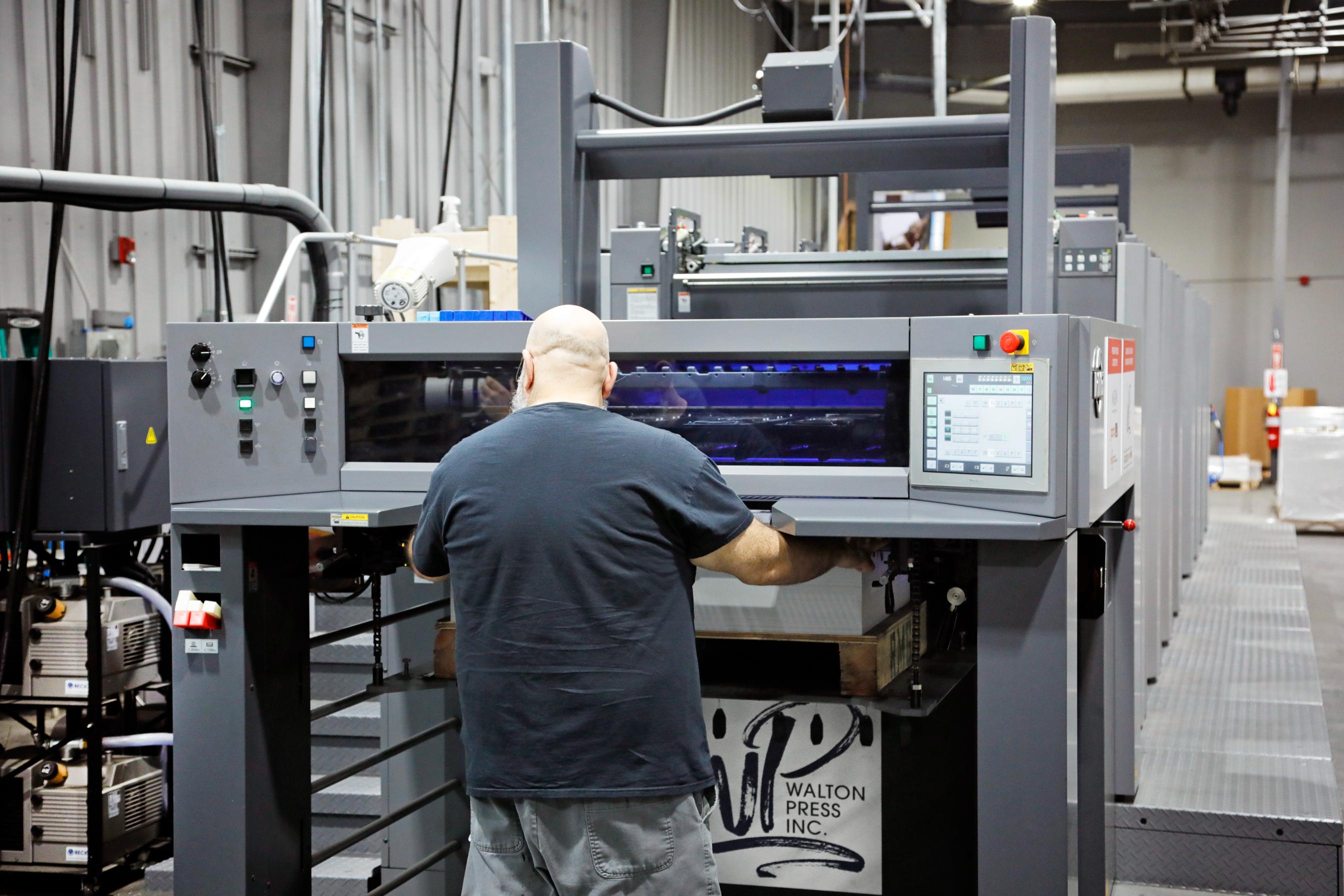
Walton Press has integrated closed-loop color control into its offset printing. A scanning spectrophotometer reads a color bar on the sheets as they run, compares the measured values against the target, and feeds corrections back to the press console so ink settings adjust during the run rather than after it. The practical result for a program is that copy 500 matches copy 1, and a reprint next year matches the one in the guest’s hand this year.
The press itself matters too. Walton Press runs an RMGT 970PF with LED-UV curing, where registration cameras check the color bars before the first sheet of the run and the ink cures instantly instead of drying on a rack. Instant curing means a program can move from press to bindery without waiting overnight, which is what protects a tight date when an agenda is finalized late.
If exact color matters for your event, share your brand color values up front and ask for a proof before the run. Approving color on a proof, in writing, is what makes the finished program predictable.
Choosing Size, Paper, and Binding
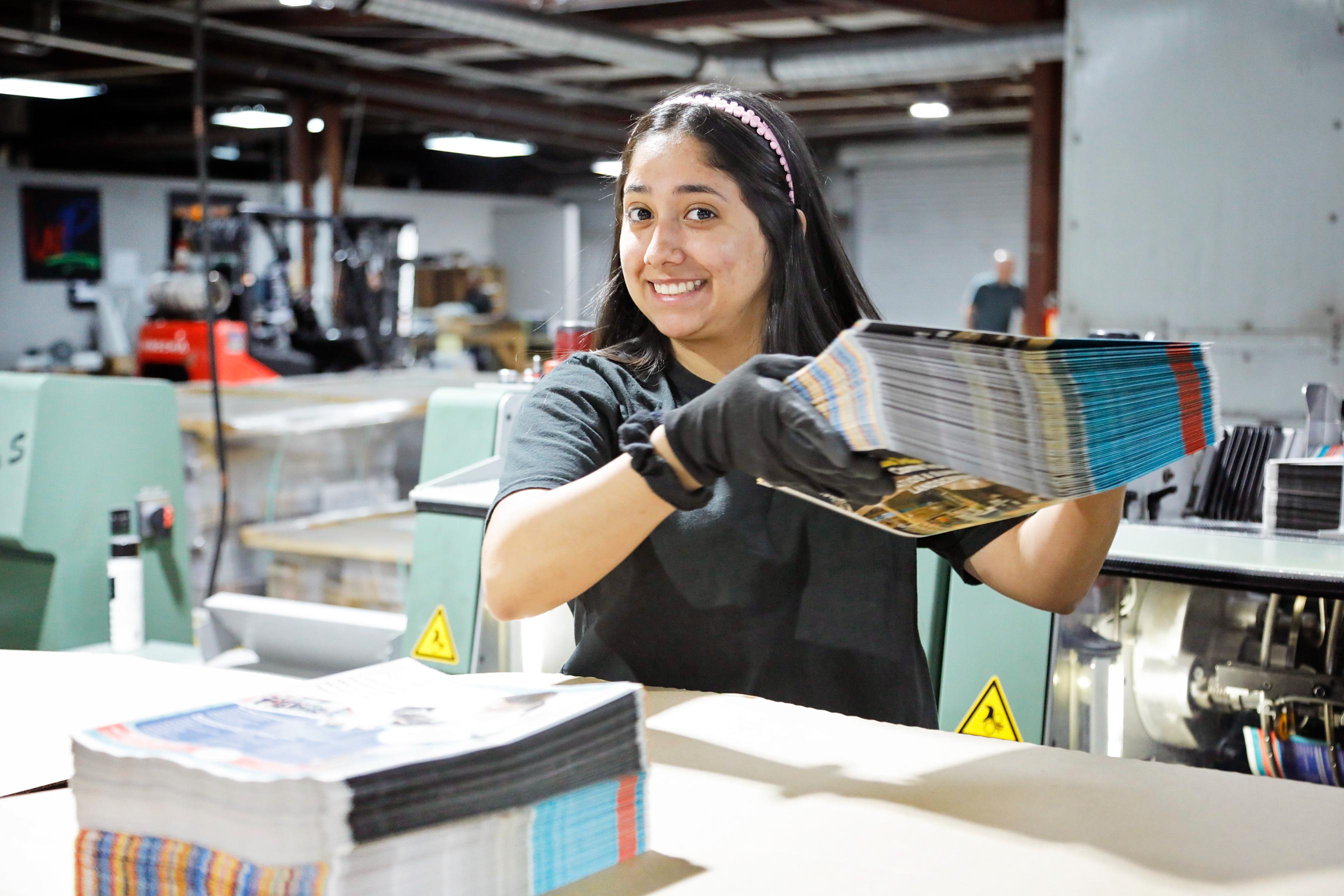
Binding choice usually comes down to page count, and Walton Press offers both saddle-stitching and perfect binding for programs. Saddle-stitched booklets, folded and stapled along the spine, work well from a handful of pages up to a medium booklet. When the page count climbs or you want a flat, squared spine that can carry a printed title, perfect binding is the better fit and gives the program a more substantial feel in the hand.
Paper is the next decision. A heavier cover stock protects the program and signals a premium event, while a lighter text stock keeps a thick booklet easy to hold. Coated sheets make photographs and logos look crisp, and an uncoated sheet is friendlier if guests will write on it, such as a worship service with responsive readings. Because programs share equipment and prep with other bound work, the same offset printing and publication printing capabilities that produce magazines and catalogs apply directly to a well-made program.
Size affects both cost and usability. A compact digest is easy to hold in a crowded row of seats, while a larger format gives designers room for a full agenda grid and photography. Decide the size early, because it drives the page count, the paper order, and the layout.
Programs Are One Piece of a Complete Event Print Kit
A program rarely travels alone. The same event usually needs signage, handouts, and leave-behinds, and printing them together keeps the paper stock, ink, and branding consistent across every touchpoint. Guests read the visual language as one system when the pieces match, and they notice when they do not.
Common companions to a program include presentation folders for sponsor and press kits, and promotional rack cards for schedules, donation asks, or next-event promotion placed on tables and at registration. Ordering the set from one printer also simplifies proofing, since one team holds the color and stock decisions for the whole kit rather than reconciling files across vendors.
Planning the full kit at the same time as the program tends to save a round of revisions later. It is easier to design a matching folder and rack card while the program layout is fresh than to recreate the look weeks after the fact.
How to Plan and Submit Your Program
Give your printer the event date as early as you can, then work backward. The program is often one of the last pieces finalized because the agenda keeps changing, so building in time for a proof and any corrections protects your deadline. Walton Press works with your timeline to have programs printed and delivered before the event, and the earlier the files land, the more room there is to catch a typo in a speaker’s title before it is on 500 copies.
Send print-ready files through the InSite portal, and follow the published prepress specifications for bleed, resolution, and file format so the job moves straight to production. If you are unsure about a spec, ask before you export rather than after. When you are ready to price a run or see stock options in person, request a quote or a sample kit and share the page count, quantity, and event date so the estimate reflects the real job.
A short pre-flight conversation prevents most reprints. Confirm the trim size, the binding, the paper, and the color expectations in writing, and the program that arrives will be the one you approved.
Frequently Asked Questions
What size should an event program be?
There is no single right size. A folded digest is easy to hold in a packed row of seats, while a letter-size or half-letter booklet gives more room for an agenda grid and photos. Choose the size first, because it sets the page count, paper, and layout for everything that follows.
Should I use saddle stitching or perfect binding?
Page count decides it. Saddle stitching, stapled along a folded spine, suits shorter booklets. Perfect binding, with a flat glued spine, handles higher page counts and lets you print a title on the spine for a more finished look. Walton Press offers both.
Can you match our brand and sponsor colors exactly?
Consistent color depends on how the press is controlled during the run. Walton Press has integrated closed-loop color control into its offset printing, a system that measures each sheet and corrects ink settings automatically so the color holds from the first copy to the last. Share your exact brand color values and ask for a proof before the run when color accuracy is critical.
How do I send my files?
Upload print-ready files through the Walton Press InSite portal and follow the published prepress specifications for bleed, resolution, and format. If you are unsure about a requirement, ask before exporting so the job moves straight into production.
How far ahead should I order?
As early as your agenda allows. Programs are often finalized late because schedules shift, so the sooner you lock the content and send files, the more room there is for proofing and corrections. Share your event date when you request a quote so production can be planned around it.
Ready to start? Bring your page count, quantity, and event date to Walton Press and the team will help you build a program that fits your event and your timeline.