Manufacturing marketing materials are the printed pieces a manufacturer uses to win and keep business: product catalogs, sell sheets and line cards, capabilities brochures, presentation folders, trade show leave-behinds, and direct mail, plus the durable manuals and safety guides that run the plant floor. For manufacturers in and around Monroe, GA, these pieces do work a website cannot. They sit on a buyer’s desk, travel in a sales rep’s bag, and survive next to a machine. This guide explains what to order, how to spec it, and how a local printer with real bindery and mailing capacity fits the job.
Key Takeaways
- The U.S. has more than 239,000 manufacturers and 74% of them employ fewer than 20 people, so strong printed collateral is how a small shop competes for a buyer’s attention.
- Georgia employed about 425,500 manufacturing workers in August 2026, which means a deep local base of B2B sellers that still rely on catalogs, sell sheets, and mailers.
- Color-accurate catalogs and sell sheets matter because manufacturing adds roughly $3.00 trillion of value to the U.S. economy through physical products that must be shown correctly.
- Plant-floor documents need lay-flat binding, tabbed dividers, and coated or synthetic stocks that stand up to grease, dust, and daily handling.
- Walton Press is an Idealliance G7 Master Targeted printer in Monroe, GA with an in-house bindery, direct mail, and fulfillment, so one partner covers design files through delivery.
What counts as manufacturing marketing materials?
More than 239,000 manufacturers operate in the United States, and 74% of them employ fewer than 20 people, according to the National Association of Manufacturers. In a field that crowded, printed collateral is often how a smaller shop earns a first meeting and stays memorable after it.
Manufacturing marketing materials fall into a few practical buckets. Product catalogs present a full line in one browsable piece. Sell sheets and line cards summarize a single product, capability, or offer on one page. Capabilities brochures tell the story of what a plant can build and to what tolerances. Presentation folders hold spec sheets, quotes, and business cards for a sales call or a plant tour. Each piece has a job, and the right specification depends on that job rather than on a generic template.
The buyers on the other side of these pieces are engineers, purchasing managers, and operations leaders. They read closely, compare closely, and keep what is useful. A sell sheet with a clear diagram and honest specifications will outlast a slick one that hides the numbers.
Why manufacturers near Monroe still invest in printed collateral
Georgia employed about 425,500 manufacturing workers in August 2026, based on Bureau of Labor Statistics data compiled by the Federal Reserve. That is a large local base of makers, suppliers, and contract shops, and many of them still sell business to business in person.
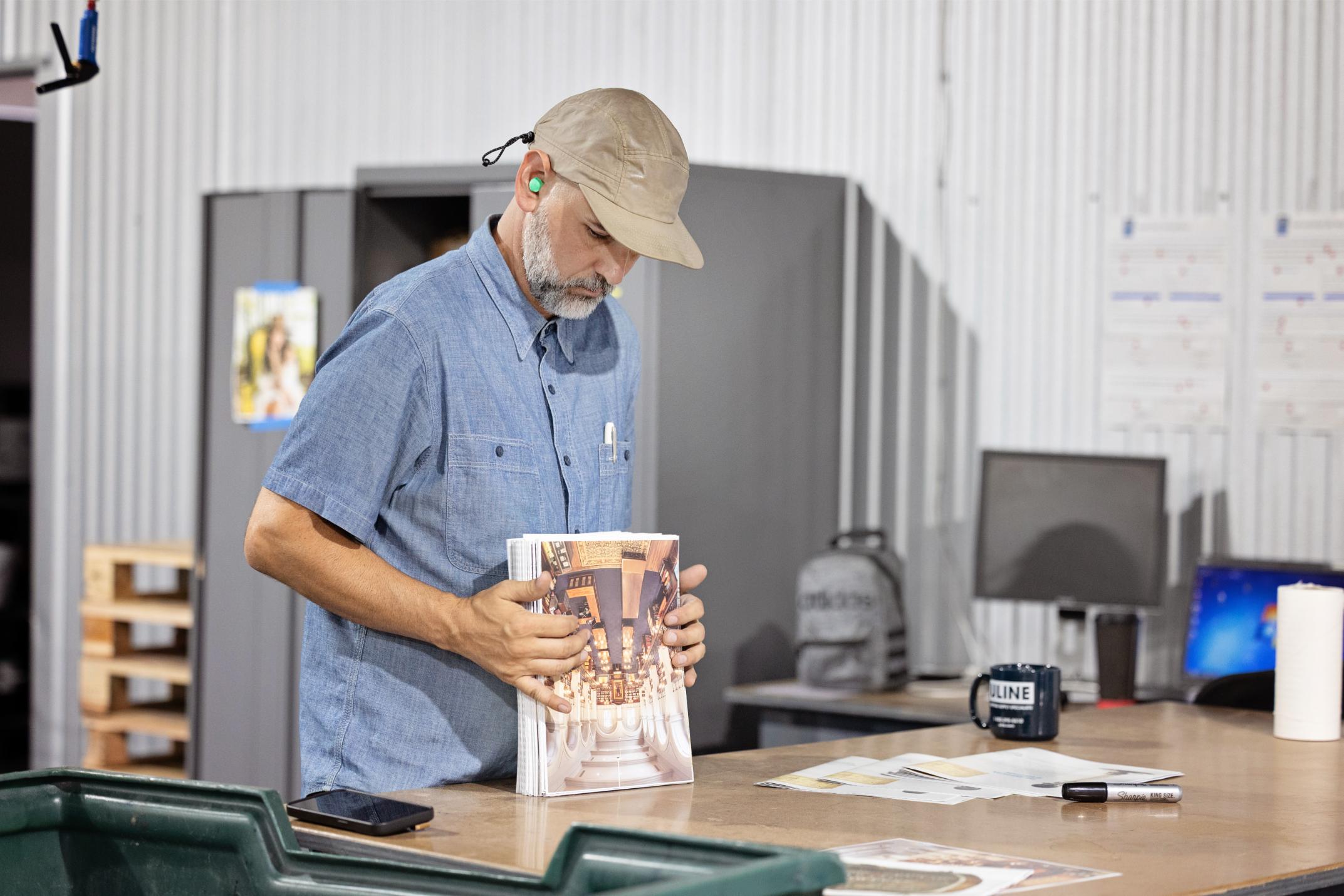
Print earns its place in that world because it is tangible and durable. A catalog stays open on a desk long after a browser tab is closed. A capabilities brochure gets handed across a table during a plant tour. And unlike a digital file, a well-made printed piece works on the trade show floor, in the field, and next to the line. Walton Press builds manufacturing pieces to survive real conditions, printing training manuals, standard operating procedures, and safety guides that stand up to daily handling, grease, dust, and wear on the manufacturing side of the business.
Who is buying
Most manufacturing marketing lands on a very small team
The sector is enormous, but the typical shop inside it is not, which is why a single print partner beats five vendors.
239,000+
manufacturers operating in the United States
74%
of them employ fewer than 20 people
425,500
manufacturing workers in Georgia, August 2026
Being local matters too. When a Monroe area manufacturer needs a proof approved before a trade show, or a reprint pulled from a retained file, a nearby partner shortens the loop between the shop and the press.
Product catalogs and sell sheets that show your line accurately
Manufacturing adds about $3.00 trillion of value to the U.S. economy, roughly 9.4% of GDP in the second quarter of 2026, per the National Association of Manufacturers. Those are physical products, and a catalog that misrepresents a finish, a color, or a part can cost a sale or trigger a return.
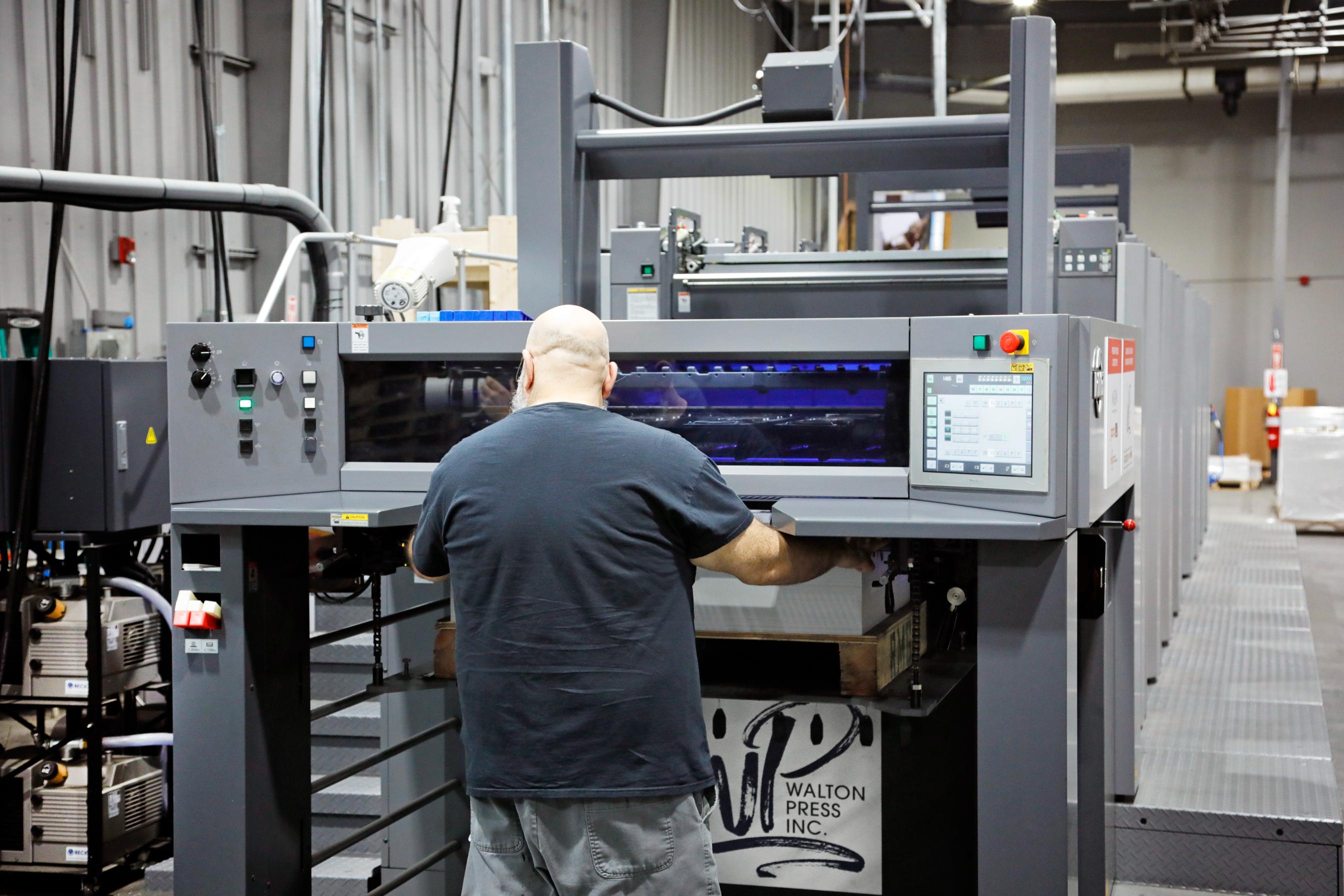
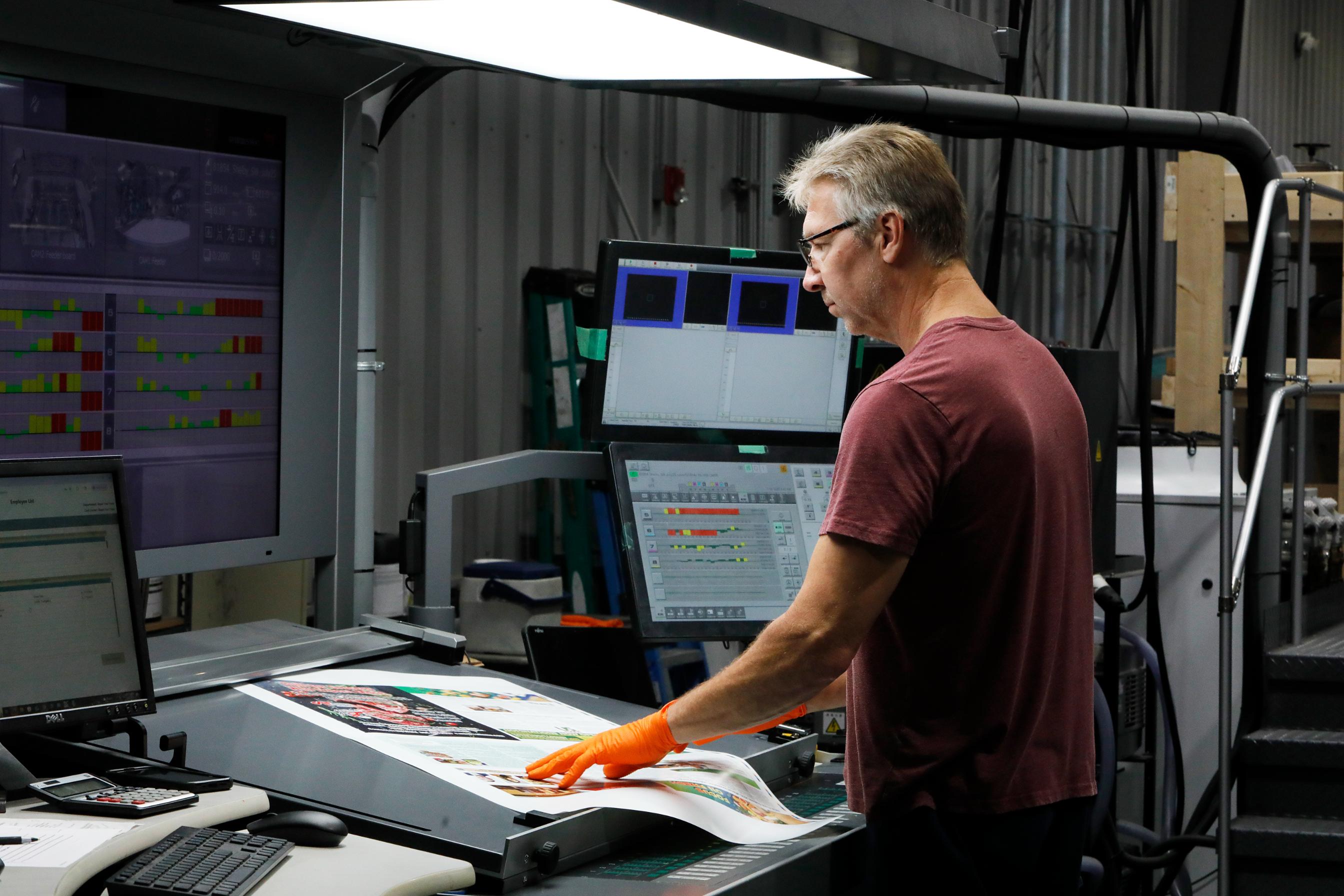
That is why color control is not a luxury for this category. Walton Press is an Idealliance G7 Master Targeted printer, a calibration standard built around consistent gray balance and predictable color from file to sheet. For a product line, that consistency means a powder-coat blue looks the same on page 4 as it does on page 40, and the same across a reprint months later.
Format follows page count and use. Saddle stitching suits shorter catalogs and sell sheets, while perfect binding gives a heavier catalog a clean, squared spine. Larger runs are a good fit for offset printing, which holds fine detail and even solids across long press runs. If your line changes often, a lighter sell sheet or line card can update one product without reprinting the whole catalog.
| Piece | Common binding or format | Best for |
|---|---|---|
| Product catalog | Saddle stitch or perfect bound | Full line, longer reference |
| Sell sheet / line card | Flat sheet, single page | One product, offer, or capability |
| Capabilities brochure | Folded or saddle stitch | Overview of what the plant builds |
| Presentation folder | Pocket folder with inserts | Sales calls, quotes, plant tours |
Durable manuals, SOPs, and safety guides for the plant floor
There were about 580,000 manufacturing job openings as of July 2026, according to the National Association of Manufacturers. High hiring means constant onboarding, and onboarding runs on clear, durable documents that a new operator can actually use at the machine.
Plant-floor documents are a different build than a glossy brochure. Walton Press prints training manuals, SOPs, and safety guides with lay-flat coil and wire-o binding so a book stays open on a bench, tabbed dividers so a worker finds a section fast, and coated or synthetic stocks chosen to resist grease, dust, and repeated handling. An in-house bindery keeps this finishing work under one roof, and retained files make reprints and revisions straightforward when a procedure changes.
The result is documentation that behaves like shop equipment rather than office paper. It gets picked up, marked, and used, which is the whole point of putting a procedure in print.
Trade shows, sales leave-behinds, and direct mail
More than 239,000 manufacturers in the United States employ about 12.6 million people, per the National Association of Manufacturers. That is the universe of buyers, specifiers, and partners a manufacturer is trying to reach, and printed pieces remain a direct way to reach named accounts.
A sell sheet works as a trade show handout, a leave-behind after a sales call, or an insert in a presentation folder. Rack cards and smaller promotional pieces fit a counter, a booth, or a mailer. For account-based outreach, direct mail puts a physical piece in front of a purchasing manager who screens most email, and Walton Press pairs mailing with fulfillment so kits and reprints ship on schedule. Print files move through the InSite portal, which keeps versions organized between your team and the press.
The strongest programs coordinate these pieces. The same product story shows up in the catalog, on the sell sheet, in the trade show handout, and in the mailer, so a buyer sees one consistent line no matter where they meet it.
Choosing a print partner in Monroe, GA
Because 74% of U.S. manufacturers run with fewer than 20 employees, per the National Association of Manufacturers, most manufacturing marketing lands on a small team that cannot babysit a print job across five vendors. A single partner that handles printing, bindery, mail, and fulfillment removes handoffs where files, color, and schedules tend to break.
Walton Press has printed for businesses from Monroe, GA since 1900, and the plant brings offset printing, an in-house bindery, direct mail, and fulfillment together under one roof, backed by Idealliance G7 Master Targeted color control you can trust across reprints. That combination fits manufacturing work, where a catalog, a spec-heavy manual, and a mailer often move at the same time.
If you are planning a catalog refresh, a new sell sheet series, or a plant-floor manual, start by listing the pieces, the run sizes, and the deadlines. Then bring the team at Walton Press the list. You can share goals and files through the contact page to scope the right specifications before anything goes on press.
Frequently Asked Questions
What are manufacturing marketing materials?
They are the printed pieces a manufacturer uses to market and support its products: product catalogs, sell sheets and line cards, capabilities brochures, presentation folders, trade show handouts, and direct mail, along with the durable manuals, SOPs, and safety guides used on the plant floor.
Why use print instead of only digital?
Printed pieces are tangible and durable. A catalog stays open on a buyer’s desk, a brochure travels through a plant tour, and a manual survives at the machine. Print also reaches named accounts through direct mail that busy purchasing managers are more likely to notice than another email.
What makes a good manufacturing catalog or sell sheet?
Accurate color and clear specifications. An Idealliance G7 Master Targeted process keeps product colors consistent from page to page and across reprints, and the right binding, saddle stitch for shorter pieces or perfect binding for heavier catalogs, keeps the piece usable.
How do plant-floor manuals differ from marketing pieces?
Manuals and SOPs are built to last in a rough environment. Lay-flat coil or wire-o binding keeps a book open at a bench, tabbed dividers speed navigation, and coated or synthetic stocks resist grease, dust, and handling.
Does Walton Press serve manufacturers near Monroe, GA?
Yes. Walton Press is a commercial printer in Monroe, GA that prints catalogs, sell sheets, brochures, manuals, and direct mail, with in-house bindery and fulfillment. You can reach the team through the contact page to scope a project.