Offset printing is a high-volume commercial print method that transfers ink from a metal plate to a rubber blanket and then onto paper, producing sharp, color-accurate results at a low cost per piece on large runs. For a business in Monroe, Georgia that needs thousands of magazines, catalogs, brochures, or mailers, offset is usually the most economical way to get professional quality at scale.
This guide explains how offset printing works, when it beats digital, what it produces best, and how to choose a printer near Monroe, GA. It draws on more than 125 years of hands-on production at Walton Press, plus current industry data on print demand and performance.
Key Takeaways
- Offset printing is the most cost-effective choice for large runs, because high fixed setup costs get spread across thousands of identical pieces.
- The crossover point where offset beats digital usually arrives in the low thousands of copies, depending on size, color, and paper.
- Print demand is holding steady. 47% of Americans still prefer to read magazines in print and 30% prefer paper catalogs, per Two Sides North America.
- Offset is the standard for magazines, catalogs, brochures, books, and direct mail, especially when brand color must stay consistent across a long run.
- Walton Press runs both web and sheetfed offset in Monroe, GA, with bindery and mailing handled in-house.
What is offset printing, and how does it work?
Offset printing anchors a large and established American industry. The United States had 22,651 printing establishments employing 389,036 people as of 2022, according to data compiled by the PRINTING United Alliance. Most of that volume runs on offset presses.
The name describes the process. Ink never touches the paper directly. It is first transferred, or offset, from a printing plate to a rubber blanket cylinder, which then rolls the image onto the sheet. That indirect path protects the plate, keeps the ink film even, and holds fine detail across tens of thousands of impressions without drifting.
Industry scale
The US offset printing base
Establishments, employment, and productivity behind commercial offset work.
PRINTING United Alliance US printing industry data, 2022 (sales per employee was $181,501 in 2010); Two Sides North America print preference survey.
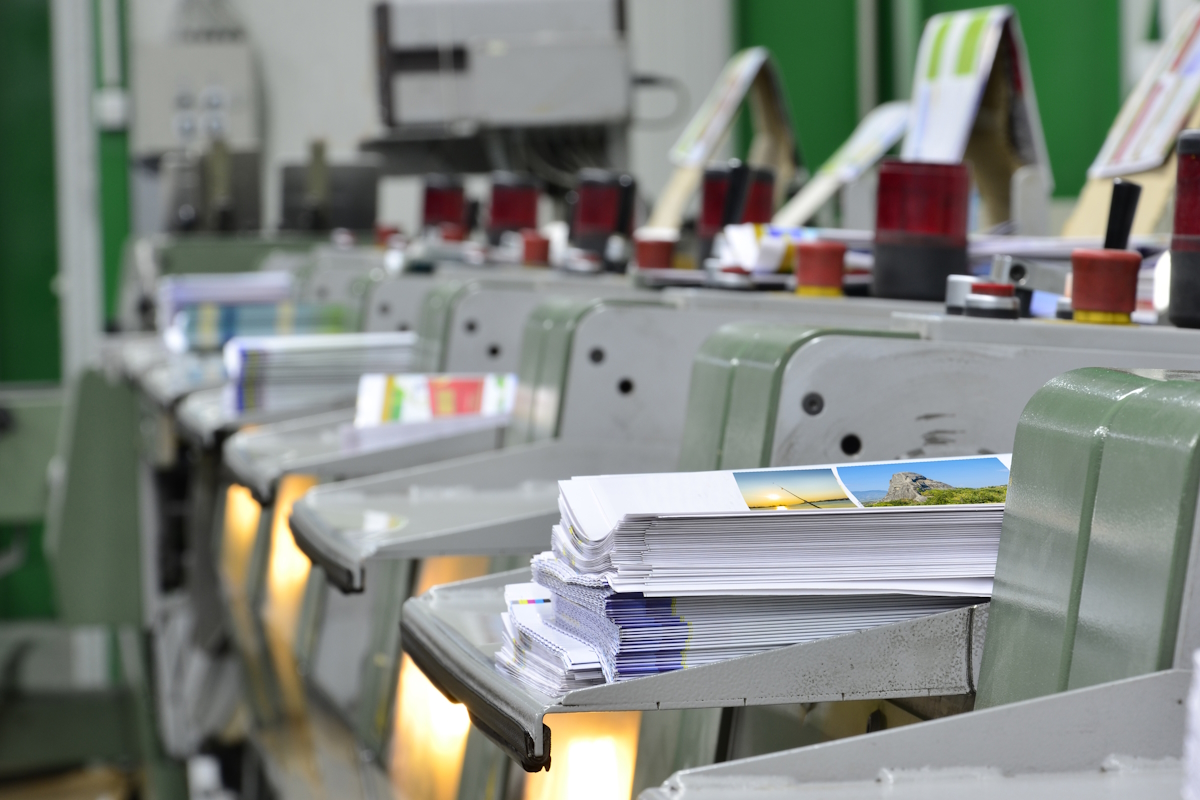
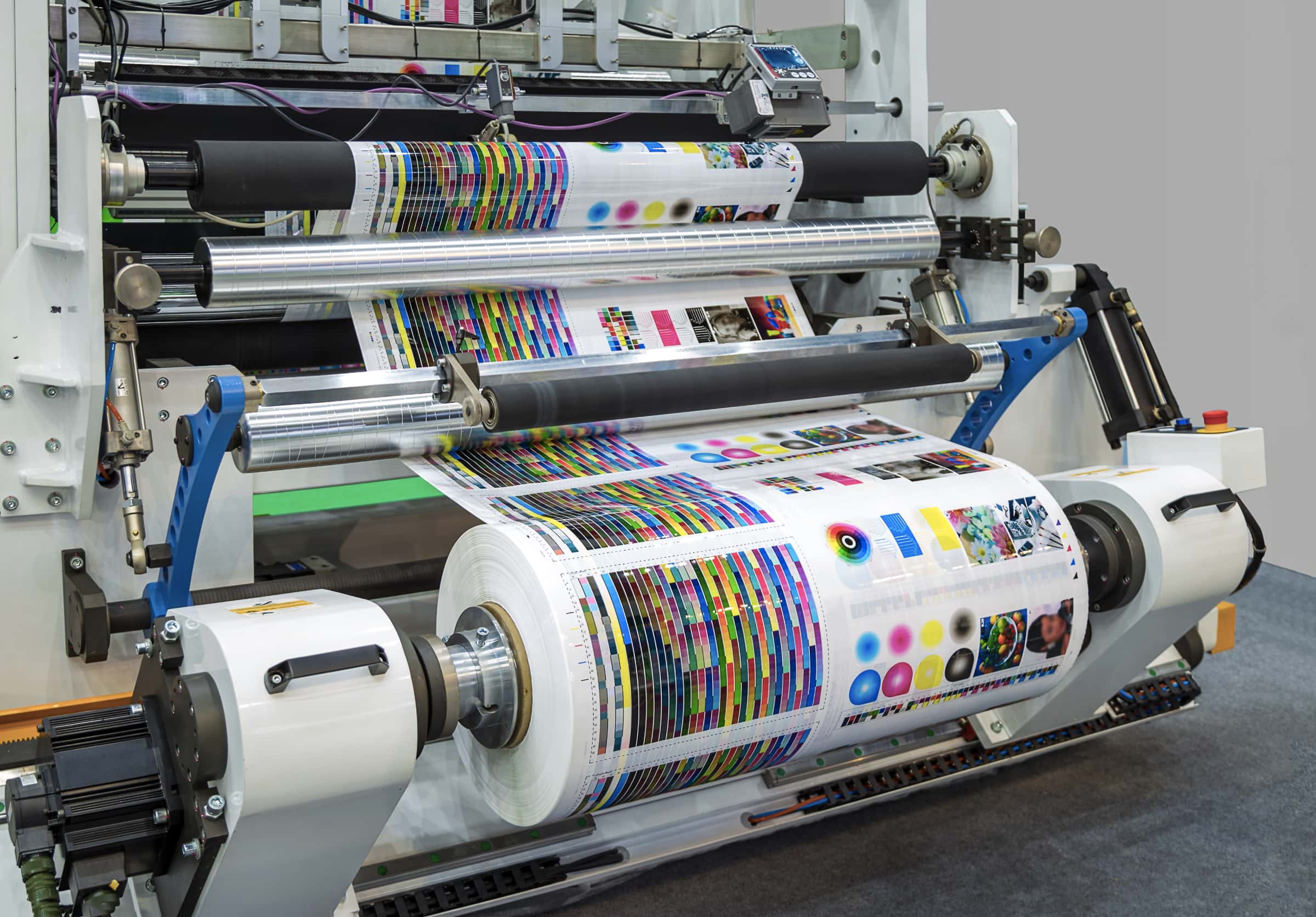
There are two main formats. Sheetfed offset prints individual sheets and suits thicker stocks, folders, covers, and short-to-medium runs. Web offset feeds paper from a continuous roll at high speed and is built for magazines, catalogs, and other long runs. Walton Press runs both web and sheetfed offset, so the press is matched to the job rather than the job forced onto one press. You can see the full range on the offset printing and publication printing pages.
Offset vs. digital printing: when does offset win?
Modern offset presses are built for efficiency at scale, and the numbers show it. Average sales per employee in the US printing industry climbed from $181,501 in 2010 to $264,458 in 2022, per the PRINTING United Alliance. That productivity is what makes offset so cheap per piece once a run gets large.
Offset wins on price once your quantity is high enough to absorb its upfront costs. Every offset job carries fixed setup costs for plates, press make-ready, and ink matching. Those costs stay the same whether you print 500 pieces or 50,000, so the more you print, the lower the cost of each piece. Digital printing skips plates and setup, which makes it cheaper for very short runs, but its per-piece cost stays roughly flat no matter how many you order.
In our production experience, the crossover usually lands in the low thousands of copies. Below that, digital is often the smarter call. Above it, offset pulls ahead and keeps widening the gap. Offset also handles larger sheet sizes, a wider range of paper stocks, and exact spot and Pantone inks, plus metallics and specialty coatings that digital presses cannot reproduce.
| Factor | Offset printing | Digital printing |
|---|---|---|
| Best run length | Thousands and up | 1 to about 1,000 |
| Cost per piece at volume | Lowest | Roughly flat |
| Setup cost | Higher (plates, make-ready) | Minimal |
| Color range | CMYK plus spot, Pantone, metallics | CMYK, some extended gamut |
| Turnaround for a single copy | Slower | Faster |
What offset printing produces best
Consumer demand for printed formats is real and measurable. 47% of Americans prefer to read magazines in print and 30% prefer paper catalogs, according to Two Sides North America. Those are exactly the formats offset was made for.
A few workhorses cover most of what businesses order:
- Magazines and publications. Web offset runs long print runs efficiently, then finishes them with saddle stitching or perfect binding. See magazine printing.
- Catalogs and sell sheets. Offset holds consistent color across hundreds of pages, which matters when every product photo has to look right. See printed catalogs.
- Brochures and rack cards. Sheetfed offset produces fold-ready sheets with crisp registration. See brochure printing.
- Books and manuals. Perfect binding gives training manuals and books a clean, professional spine.
Walton Press offers perfect binding and saddle stitching in-house, so publications move from press to finished product without leaving the building.
Why offset delivers color you can trust across a long run
Print still earns trust from readers. 43% of consumers say they trust news stories more in print than online, up from 34% two years earlier, per Two Sides North America. That trust rides on quality, and consistent quality is where offset separates itself.
Offset holds color steady from the first sheet to the last because ink is mixed to a measured density and delivered through a controlled system of rollers. For brand-critical work, offset can print an exact spot color rather than simulating it with four-color dots, so a logo blue looks identical on the first copy and the ten-thousandth. That repeatability is the reason offset remains the standard for magazines, catalogs, and brochures where brand integrity is not negotiable. The payoff shows up as three things buyers actually notice: superior color fidelity, sharp detail on text and images, and a lower cost per unit at scale.
How offset printing powers direct mail in Monroe, GA
Direct mail keeps working because people keep the mail. Advertising mail stays in the average household for 17 days, and 51% of consumers say they share direct mail with friends and family, according to USPS. A campaign that sits on a kitchen counter for over two weeks is hard for email to match.
Offset makes large mail campaigns affordable, because postcards, letters, and self-mailers are exactly the high-volume, identical pieces offset prints most cheaply. A printer that runs offset and handles the mailing under one roof also removes the handoffs that add cost and delay. Walton Press pairs offset with in-house direct mail services: mailing list preparation, inkjet addressing, and postal optimization that earns postage discounts. Pack, kit, and warehouse the rest through fulfillment services and one vendor covers print to doorstep.
How Monroe, GA businesses should choose an offset printer
Capabilities vary widely from shop to shop. More than half of US printing companies, 11,679 of 22,651, have fewer than five employees, per the PRINTING United Alliance, so not every printer can take a large offset run from file to mailbox. Use a short checklist before you commit:
- Presses. Ask whether the shop runs both web and sheetfed offset, so your run length is matched to the right press.
- Bindery in-house. Perfect binding and saddle stitching without outsourcing keeps schedules tight and quality controlled.
- Mailing under one roof. List preparation, addressing, and postal sorting in the same building save money and time.
- Proofing and file handling. An online portal for uploads and proof approval prevents surprises. Walton Press uses an InSite prepress portal for exactly this.
- Turnaround and support. A dedicated account manager and realistic schedules matter more than a low quote that slips.
- Local partnership. A printer you can visit and hold accountable. Walton Press has printed for businesses in and around Monroe, GA since 1900.
Walton Press is located at 402 Mayfield Drive, Monroe, GA 30655, and reachable at 1-800-354-0235 or info@waltonpress.com.
Frequently Asked Questions
Is offset printing cheaper than digital? For large runs, yes. Offset spreads its fixed setup costs across every piece, so the per-piece price keeps dropping as quantity rises. For very short runs, digital is usually cheaper because it has almost no setup cost.
What is the minimum quantity for offset printing? There is no hard minimum, but offset becomes the economical choice once quantities reach the low thousands. Below that, ask your printer whether digital would cost less for the same job.
What is the difference between web and sheetfed offset? Web offset prints from a continuous roll of paper at high speed and suits long runs like magazines and catalogs. Sheetfed offset prints individual sheets and suits thicker stocks, covers, folders, and short-to-medium runs.
How long does offset printing take? Turnaround depends on quantity, finishing, and mailing, but offset runs need plate and make-ready time up front. Most commercial jobs move faster when files are print-ready and proofs are approved quickly.
Does Walton Press offer offset printing near Monroe, GA? Yes. Walton Press runs web and sheetfed offset in Monroe, GA, with bindery and mailing in-house. Request a quote or a sample kit through the contact page.
Ready to price a run? Walton Press has combined offset craftsmanship with modern finishing and mailing for over 125 years. Request a quote or order a sample kit and see the difference a dedicated local partner makes.
By the Walton Press Team. Walton Press, 402 Mayfield Drive, Monroe, GA 30655. info@waltonpress.com. 1-800-354-0235.