
Walton Press

Offset Printing in Monroe, GA: The Complete Buyer’s Guide

Offset printing is a high-volume commercial print method that transfers ink from a metal plate to a rubber blanket and then onto paper, producing sharp, color-accurate results at a low cost per piece on large runs. For a business in Monroe, Georgia that needs thousands of magazines, catalogs, brochures, or mailers, offset is usually the most economical way to get professional quality at scale.

This guide explains how offset printing works, when it beats digital, what it produces best, and how to choose a printer near Monroe, GA. It draws on more than 125 years of hands-on production at Walton Press, plus current industry data on print demand and performance.

Key Takeaways

  • Offset printing is the most cost-effective choice for large runs, because high fixed setup costs get spread across thousands of identical pieces.
  • The crossover point where offset beats digital usually arrives in the low thousands of copies, depending on size, color, and paper.
  • Print demand is holding steady. 47% of Americans still prefer to read magazines in print and 30% prefer paper catalogs, per Two Sides North America.
  • Offset is the standard for magazines, catalogs, brochures, books, and direct mail, especially when brand color must stay consistent across a long run.
  • Walton Press runs both web and sheetfed offset in Monroe, GA, with bindery and mailing handled in-house.

What is offset printing, and how does it work?

Offset printing anchors a large and established American industry. The United States had 22,651 printing establishments employing 389,036 people as of 2022, according to data compiled by the PRINTING United Alliance. Most of that volume runs on offset presses.

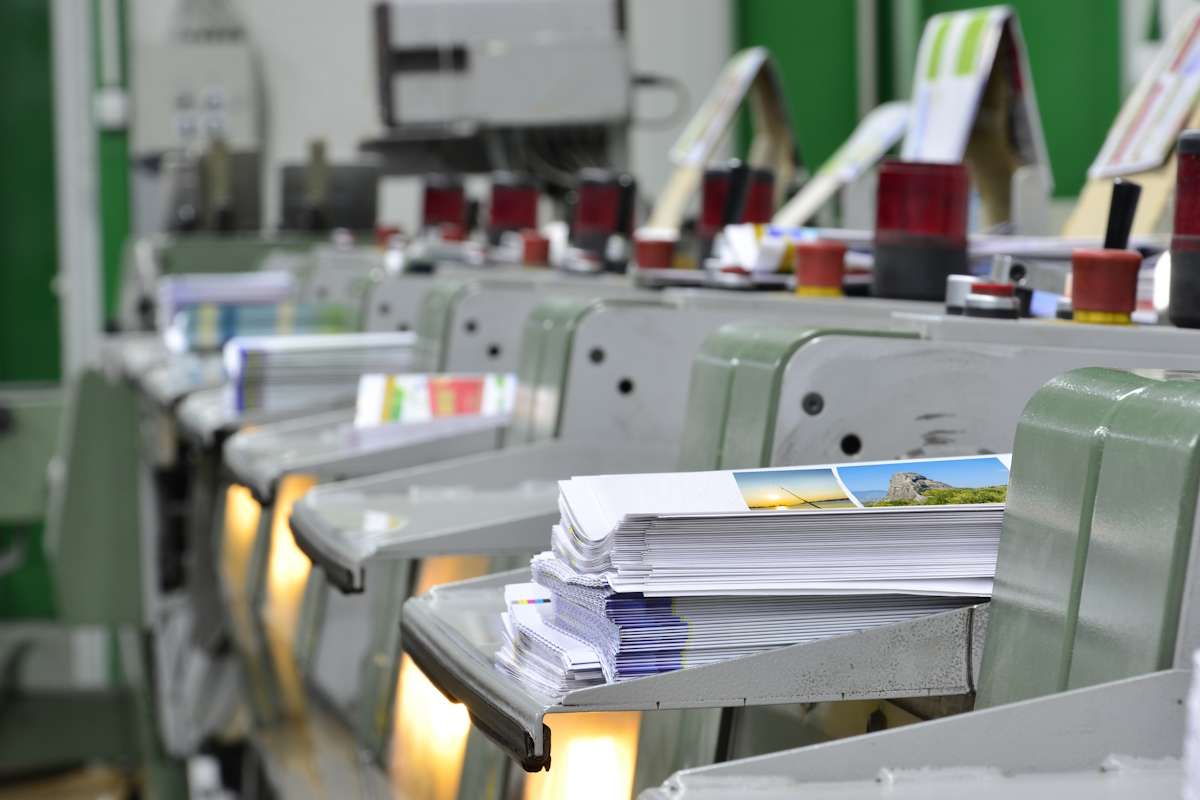
The name describes the process. Ink never touches the paper directly. It is first transferred, or offset, from a printing plate to a rubber blanket cylinder, which then rolls the image onto the sheet. That indirect path protects the plate, keeps the ink film even, and holds fine detail across tens of thousands of impressions without drifting.

Industry scale

The US offset printing base

Establishments, employment, and productivity behind commercial offset work.

22,651
US printing establishments, 2022
389,036
people employed in US printing
$264,458
average sales per employee, 2022
47%
of Americans still prefer magazines in print

PRINTING United Alliance US printing industry data, 2022 (sales per employee was $181,501 in 2010); Two Sides North America print preference survey.

There are two main formats. Sheetfed offset prints individual sheets and suits thicker stocks, folders, covers, and short-to-medium runs. Web offset feeds paper from a continuous roll at high speed and is built for magazines, catalogs, and other long runs. Walton Press runs both web and sheetfed offset, so the press is matched to the job rather than the job forced onto one press. You can see the full range on the offset printing and publication printing pages.

Offset vs. digital printing: when does offset win?

Modern offset presses are built for efficiency at scale, and the numbers show it. Average sales per employee in the US printing industry climbed from $181,501 in 2010 to $264,458 in 2022, per the PRINTING United Alliance. That productivity is what makes offset so cheap per piece once a run gets large.

Offset wins on price once your quantity is high enough to absorb its upfront costs. Every offset job carries fixed setup costs for plates, press make-ready, and ink matching. Those costs stay the same whether you print 500 pieces or 50,000, so the more you print, the lower the cost of each piece. Digital printing skips plates and setup, which makes it cheaper for very short runs, but its per-piece cost stays roughly flat no matter how many you order.

In our production experience, the crossover usually lands in the low thousands of copies. Below that, digital is often the smarter call. Above it, offset pulls ahead and keeps widening the gap. Offset also handles larger sheet sizes, a wider range of paper stocks, and exact spot and Pantone inks, plus metallics and specialty coatings that digital presses cannot reproduce.

Factor Offset printing Digital printing
Best run length Thousands and up 1 to about 1,000
Cost per piece at volume Lowest Roughly flat
Setup cost Higher (plates, make-ready) Minimal
Color range CMYK plus spot, Pantone, metallics CMYK, some extended gamut
Turnaround for a single copy Slower Faster

What offset printing produces best

Consumer demand for printed formats is real and measurable. 47% of Americans prefer to read magazines in print and 30% prefer paper catalogs, according to Two Sides North America. Those are exactly the formats offset was made for.

A few workhorses cover most of what businesses order:

  • Magazines and publications. Web offset runs long print runs efficiently, then finishes them with saddle stitching or perfect binding. See magazine printing.
  • Catalogs and sell sheets. Offset holds consistent color across hundreds of pages, which matters when every product photo has to look right. See printed catalogs.
  • Brochures and rack cards. Sheetfed offset produces fold-ready sheets with crisp registration. See brochure printing.
  • Books and manuals. Perfect binding gives training manuals and books a clean, professional spine.

Walton Press offers perfect binding and saddle stitching in-house, so publications move from press to finished product without leaving the building.

Why offset delivers color you can trust across a long run

Print still earns trust from readers. 43% of consumers say they trust news stories more in print than online, up from 34% two years earlier, per Two Sides North America. That trust rides on quality, and consistent quality is where offset separates itself.

Offset holds color steady from the first sheet to the last because ink is mixed to a measured density and delivered through a controlled system of rollers. For brand-critical work, offset can print an exact spot color rather than simulating it with four-color dots, so a logo blue looks identical on the first copy and the ten-thousandth. That repeatability is the reason offset remains the standard for magazines, catalogs, and brochures where brand integrity is not negotiable. The payoff shows up as three things buyers actually notice: superior color fidelity, sharp detail on text and images, and a lower cost per unit at scale.

How offset printing powers direct mail in Monroe, GA

Direct mail keeps working because people keep the mail. Advertising mail stays in the average household for 17 days, and 51% of consumers say they share direct mail with friends and family, according to USPS. A campaign that sits on a kitchen counter for over two weeks is hard for email to match.

Offset makes large mail campaigns affordable, because postcards, letters, and self-mailers are exactly the high-volume, identical pieces offset prints most cheaply. A printer that runs offset and handles the mailing under one roof also removes the handoffs that add cost and delay. Walton Press pairs offset with in-house direct mail services: mailing list preparation, inkjet addressing, and postal optimization that earns postage discounts. Pack, kit, and warehouse the rest through fulfillment services and one vendor covers print to doorstep.

How Monroe, GA businesses should choose an offset printer

Capabilities vary widely from shop to shop. More than half of US printing companies, 11,679 of 22,651, have fewer than five employees, per the PRINTING United Alliance, so not every printer can take a large offset run from file to mailbox. Use a short checklist before you commit:

  • Presses. Ask whether the shop runs both web and sheetfed offset, so your run length is matched to the right press.
  • Bindery in-house. Perfect binding and saddle stitching without outsourcing keeps schedules tight and quality controlled.
  • Mailing under one roof. List preparation, addressing, and postal sorting in the same building save money and time.
  • Proofing and file handling. An online portal for uploads and proof approval prevents surprises. Walton Press uses an InSite prepress portal for exactly this.
  • Turnaround and support. A dedicated account manager and realistic schedules matter more than a low quote that slips.
  • Local partnership. A printer you can visit and hold accountable. Walton Press has printed for businesses in and around Monroe, GA since 1900.

Walton Press is located at 402 Mayfield Drive, Monroe, GA 30655, and reachable at 1-800-354-0235 or info@waltonpress.com.

Frequently Asked Questions

Is offset printing cheaper than digital? For large runs, yes. Offset spreads its fixed setup costs across every piece, so the per-piece price keeps dropping as quantity rises. For very short runs, digital is usually cheaper because it has almost no setup cost.

What is the minimum quantity for offset printing? There is no hard minimum, but offset becomes the economical choice once quantities reach the low thousands. Below that, ask your printer whether digital would cost less for the same job.

What is the difference between web and sheetfed offset? Web offset prints from a continuous roll of paper at high speed and suits long runs like magazines and catalogs. Sheetfed offset prints individual sheets and suits thicker stocks, covers, folders, and short-to-medium runs.

How long does offset printing take? Turnaround depends on quantity, finishing, and mailing, but offset runs need plate and make-ready time up front. Most commercial jobs move faster when files are print-ready and proofs are approved quickly.

Does Walton Press offer offset printing near Monroe, GA? Yes. Walton Press runs web and sheetfed offset in Monroe, GA, with bindery and mailing in-house. Request a quote or a sample kit through the contact page.

Ready to price a run? Walton Press has combined offset craftsmanship with modern finishing and mailing for over 125 years. Request a quote or order a sample kit and see the difference a dedicated local partner makes.

By the Walton Press Team. Walton Press, 402 Mayfield Drive, Monroe, GA 30655. info@waltonpress.com. 1-800-354-0235.
Magazine Printing in Monroe, GA: A Publisher’s Guide

Magazine printing in Monroe, GA means one production floor handling the press work, the binding, the addressing, and the mailing for a finished issue, rather than stitching those steps together across three separate vendors. Walton Press, based at 402 Mayfield Drive in Monroe, has run that model for more than 125 years, printing regional lifestyle titles, membership journals, and trade publications for clients across Georgia and the Southeast. This guide walks a publisher through what local magazine printing involves, why print still earns reader attention, and how to choose a press, a binding style, and a mailing plan that fits your title.

The short version: if your magazine has to hold its color, meet a fixed publication date, and land in every subscriber’s mailbox at the lowest legal postage, the printer you pick matters more than almost any other production decision you make this year.

Key Takeaways

  • Magazine printing in Monroe, GA is a full-service job. Presswork, bindery, addressing, and mailing under one roof remove the handoffs that cause color drift and missed dates.
  • Print still commands attention. 87% of American adults engaged with magazine media, and 78% of readers who see a magazine ad take an action, according to the News/Media Alliance.
  • Offset is the standard for real circulation. Sheetfed offset suits short-run, niche titles; web offset carries high-volume runs at a lower cost per copy.
  • Binding is a strategic choice. Saddle stitching fits thinner issues; perfect binding gives thicker magazines a flat, printable spine.
  • In-house mailing protects your budget. With USPS Periodicals volume down 65% since 2008 and the class running “underwater,” postal optimization and clean addressing are where publishers save real money.

What does magazine printing in Monroe, GA actually involve?

Magazine printing in Monroe covers the entire path from a print-ready file to a mailed copy: prepress and proofing, offset presswork, bindery, inkjet addressing, polybagging where needed, and postal-optimized mailing. Walton Press runs all of these steps in a single Monroe facility, which is the practical difference between a “printer” and a production partner. When one team owns every stage, there is no shipping a signature across town to a bindery, no second vendor to blame for a color shift, and no gap in the schedule where an issue can stall.

Monroe sits in Walton County, roughly an hour east of Atlanta, which puts a full-service commercial plant within easy reach of publishers across metro Atlanta, Athens, and the wider Southeast. That geography lets a regional publisher work with a nearby press instead of shipping files to a distant national printer and waiting on freight.

For a publisher, the payoff is accountability. One point of contact, one schedule, and one team that answers for the finished issue.

Why does print still earn reader attention?

Print earns attention because readers still show up for it in large numbers and act on what they see. Nearly nine in ten American adults, 87%, engaged with magazine media in recent months, and 78% of readers who see an ad in their magazine take an action as a result, per the News/Media Alliance Magazine Media Factbook drawing on MRI-Simmons data. One in four readers looked for more information about the product (25%) or visited the advertiser’s website (23%).

Those numbers matter to two people at once: the publisher selling ad pages and the advertiser buying them. A printed magazine is a physical object a reader keeps, hands to someone else, and returns to over weeks. That shelf life is exactly what an email or a social post does not have.

Reader response

What magazine readers actually do

Share of readers taking each action after engaging with magazine media.

Engaged with magazine media87%Took action on an ad78%Looked for more information25%Visited advertiser's website23%

News/Media Alliance magazine media engagement research, as cited in the post.

For membership and trade publishers, the print edition is also proof of value. It is the tangible thing a dues-paying member receives, and it carries the publication’s authority in a way a PDF rarely does.

Sheetfed or web offset: which press fits your magazine?

The right press depends on your run length and page count. Offset printing is the gold standard for magazines because it delivers consistent, high-fidelity color across long runs at a low cost per copy. Within offset, the choice is between two press types, and a Monroe plant that runs both can match the press to the job rather than forcing the job onto whatever press it owns.

  • Sheetfed offset prints on individual sheets. It is the better fit for shorter runs, niche titles, heavier cover stocks, and issues where premium finishing matters more than raw speed.
  • Web offset prints from a continuous roll of paper at high speed. It is the economical choice for high-volume circulations, where the lower cost per copy on a long run is decisive.

A publisher rarely needs to master this distinction alone. The value of a full-service printer is a production team that reads your specs, your circulation, and your budget, then recommends the press that produces the best copy for the least money.

How does binding choice shape your finished magazine?

Binding is a design and durability decision, not an afterthought. The two common magazine methods are saddle stitching and perfect binding, and the right one depends on page count and the impression you want the issue to make.

Binding style Best for What it looks like
Saddle stitching Thinner issues, typically up to about 80 pages Folded and stapled through the spine; lies flat, lower cost
Perfect binding Thicker magazines and premium titles Squared, glued spine that can be printed on, like a paperback

Saddle stitching keeps costs down and works well for lighter monthlies and quarterlies. Perfect binding gives a heavier issue a flat, printable spine that reads as premium on a shelf or a coffee table, which is why many lifestyle and annual titles choose it. Walton Press offers both, along with the paper stocks and finishes that decide how the final piece feels in a reader’s hands.

How does in-house mailing protect your budget?

In-house mailing protects your budget because addressing and postal optimization are where magazine economics are won or lost. United States Postal Service Periodicals volume fell from 8.6 billion pieces in 2008 to 3.0 billion in 2023, a 65% decline, and the class now runs “underwater,” meaning USPS spends more to process and deliver it than it collects. Postage keeps climbing, so the cost of getting each copy delivered is often larger than the cost of printing it.

The Postal Service still moved 112.5 billion pieces of mail in fiscal year 2024, according to USPS Postal Facts, so the network reaches every subscriber. The job is to reach them at the lowest legal rate. That comes from clean address hygiene, correct presorting, inkjet addressing, and mail prepared to postal specification, all of which Walton Press handles in-house alongside the presswork.

Print and mail together also drive response. The ANA Response Rate Report pegs direct mail’s average response rate near 4.4%, with house lists reaching 5% to 9% and a reported 161% return on investment, well above email and social. A magazine that includes a direct mail component, an insert, a renewal notice, or a subscriber offer, turns a single production run into a revenue tool.

Why does color consistency matter issue after issue?

Color consistency matters because a magazine is a brand, and a brand that shifts hue from one issue to the next looks careless to readers and advertisers alike. Walton Press is an Idealliance G7 Master Targeted printer, a credential that verifies a print process meets a defined gray-balance and tonality standard. In plain terms, the cover, the photography, and the brand colors that run in your first issue look the same in your hundredth.

For an advertiser paying for a full-page spread, that consistency is the promise that their logo prints the way their brand guidelines demand. For a publisher, it is the difference between a title that looks professionally produced and one that does not.

How do you choose a magazine printer in Monroe, GA?

Choose a magazine printer by matching capability, accountability, and location to your title’s real needs. Use this checklist when you evaluate a printer for a regional or trade magazine:

  1. Full-service under one roof. Confirm presswork, bindery, addressing, and mailing all happen in-house, not through subcontractors.
  2. Both press types. A printer with sheetfed and web offset can right-size the press to your run instead of overcharging you on the wrong one.
  3. G7 color certification. Ask directly whether the plant holds a recognized color standard so your issues stay consistent.
  4. Mailing expertise. Verify they prepare mail to USPS specification and optimize postage, because that is where your money leaks.
  5. A dedicated account manager. One point of contact who knows your schedule prevents the dropped handoffs that miss publication dates.
  6. Proof before you commit. Request a quote and a sample kit so you can judge quality in your own hands.

Beyond magazines, a full-service Monroe plant can also produce the catalogs, event programs, and marketing collateral that many publishers and associations need alongside their flagship title, which keeps your print program with one accountable partner.

Frequently Asked Questions

How long does it take to print a magazine?
Turnaround depends on page count, run length, binding, and mailing, but a full-service printer that runs presswork and bindery in one plant can hold tighter, more predictable schedules than a shop that ships work to outside vendors. Share your issue date up front and ask for a production timeline in writing.

What is the minimum order for magazine printing?
There is no single industry minimum. Sheetfed offset makes shorter, niche runs practical, while web offset becomes more economical as circulation grows. A printer that runs both press types can quote either without pushing you toward the wrong one.

Can Walton Press mail my magazine to subscribers?
Yes. Walton Press handles inkjet addressing, mailing list preparation, polybagging, and postal optimization in-house in Monroe, GA, so a single team prints, binds, and mails each issue on schedule and at the best available postage rate.

Do you serve publishers outside Monroe, Georgia?
Yes. Walton Press prints for publishers across Georgia and the wider Southeast from its Monroe facility, and it manages mailing to subscribers nationwide.

Which binding should I choose for my magazine?
Use saddle stitching for thinner issues, up to roughly 80 pages, and perfect binding for thicker or premium titles that benefit from a flat, printable spine. Your printer can recommend the right method based on your page count and paper.

Ready to print your next issue?

Whether you are launching a new title or looking for a more reliable partner for an established one, Walton Press prints, binds, and mails magazines for publishers in Monroe, GA and across the Southeast. Request a quote or order a sample kit and judge the quality in your own hands. Call 1-800-354-0235 or contact the Walton Press team to start the conversation.

Hospitality Marketing Materials in Monroe, GA: A Print Guide

Hospitality marketing materials in Monroe, GA are the printed pieces that hotels, restaurants, event venues, and attractions use to win a guest before, during, and after a visit. Think rack cards in a lobby display, a folded dining menu, an event program, or a postcard that lands in a mailbox. Done well, they turn a passing traveler into a booking, a walk-in, and a repeat customer.

Key Takeaways

  • Hospitality marketing materials include rack cards, brochures, menus, table tents, event programs, guest folders, and direct mail.
  • Georgia tourism is a large local market: 174.2 million visitors spent $45.2 billion in the state in 2024, according to the Georgia Department of Economic Development.
  • Print earns attention that screens do not. A U.S. Postal Service and Temple University study found physical mail produces a stronger emotional response and a longer-lasting impact than digital ads.
  • Direct mail response rates run far ahead of email, so a printed postcard is one of the most reliable local outreach tools a Monroe hospitality brand has.
  • Look for a printer with certified color control, in-house finishing and mailing, and fast, local turnaround.

What counts as hospitality marketing materials?

Georgia’s 174.2 million visitors spent $45.2 billion on the state’s hotels, restaurants, recreation, transportation, and other local businesses in 2024, reports the Georgia Department of Economic Development. Every one of those visits started with a decision, and printed materials shape a lot of those decisions.

Hospitality marketing materials are the physical touchpoints a guest holds. The core set is short and practical:

  • Rack cards and brochures in lobbies, visitor centers, and welcome desks.
  • Menus, table tents, and drink cards for restaurants, bars, and cafes.
  • Event programs and directories for weddings, galas, conferences, and festivals.
  • Guest folders, welcome letters, and in-room directories for hotels and inns.
  • Direct mail postcards and mailers that reach nearby households and past guests.

Each piece does one job: get picked up, get read, and prompt an action. That is why format, paper, and color matter as much as the words. Walton Press has printed for tourism and hospitality for more than a century, so these formats are the shop’s daily work, not a side product.

Why print still wins in hospitality

A U.S. Postal Service and Temple University neuroscience study found that physical mail triggers a stronger emotional response and leaves a longer-lasting impact than digital ads, according to USPS. In a hospitality setting, that advantage compounds. Your marketing sits in the guest’s hand at the exact moment of decision.

Digital ads scroll past. A rack card stays in a display rack for weeks. A menu is read at the table, cover to cover, by a captive audience. A well-designed brochure gets tucked into a bag and carried home. Print is slow media in the best sense: it lingers where a guest will see it again.

Print also signals quality. A thin, off-color flyer tells a traveler the experience will be thin too. A rich, well-finished piece tells them the opposite. For hotels and restaurants that sell an experience, the printed piece is a preview of that experience.

The core pieces every Monroe hospitality brand needs

Georgia’s visitor economy supports 470,570 jobs and generates $82 billion in statewide economic impact, per the Georgia Department of Economic Development. Competing for a share of that spending in and around Monroe and Walton County starts with a handful of dependable print pieces.

Rack cards. These are the workhorses of tourism marketing. Printed on heavy, glossy stock, promotional rack cards stand up in lobby and visitor-center displays and hold a clear photo, a short pitch, and a call to action. They are affordable enough to reprint for each season or promotion.

The Georgia market

The visitor economy Monroe hospitality sells into

State tourism figures behind local restaurant, hotel, and event demand.

174.2M
visitors to Georgia in 2024
$45.2B
spent with Georgia hotels, restaurants, and local businesses
470,570
Georgia jobs supported by the visitor economy
$82B
total statewide economic impact

Georgia Department of Economic Development, 2024 tourism figures.

Brochures. A tri-fold or gate-fold piece carries more of your story: rooms, amenities, a menu preview, a map, and directions. Quality brochure printing uses stocks and coatings that survive lobby racks and glove boxes while keeping photography vivid.

Event programs. From weddings and galas to conferences and festivals, a printed event program sets the tone and guides the guest. Saddle-stitching or perfect binding gives the piece a finish that matches the occasion.

Destination and travel pieces. Tourism boards, hotels, and attractions rely on destination guides, visitor maps, and travel brochures. Walton Press produces these as part of its travel and tourism printing work for clients across Georgia and the Southeast.

Restaurants and hotels: menus, table tents, and guest collateral

The U.S. restaurant industry is projected to reach $1.5 trillion in sales and employ 15.9 million people in 2025, according to the National Restaurant Association. For a Monroe restaurant, the menu is both the sales tool and the brand, and it deserves real print quality.

Menus take a beating. They are handled at every table, wiped down, and folded. Durable stock and a protective coating keep them looking new through a busy season. Table tents and drink cards do the upselling: a printed card for a seasonal cocktail or a dessert special sells more than a server can mention in passing.

Hotels and inns lean on a slightly different set. In-room directories, welcome folders, and local-guide cards shape the stay itself. A presentation folder that holds a welcome letter, a Wi-Fi card, and a few local rack cards turns check-in into a branded moment. These pieces are quiet, but they are read closely by a guest with time on their hands.

Direct mail for Monroe hospitality

Direct mail earns response rates of roughly 5% to 9% from house lists, compared with about 1% for email, reports Printing Impressions citing the ANA Response Rate Report. For a local hotel, restaurant, or venue, that gap makes a printed postcard one of the most reliable ways to fill rooms and tables.

Direct mail fits hospitality because the audience is local and reachable. A restaurant can mail a grand-opening or seasonal-menu postcard to nearby ZIP codes. A venue can reach past clients about a new package. A hotel can invite local households to a Sunday brunch or a holiday event. Full-service direct mail services handle list processing, addressing, postal optimization, and USPS compliance, so the piece reaches the mailbox at the lowest available postage rate.

The details that raise response are practical: a strong offer, a clear deadline, a single call to action, and a clean list. Pair the mailer with a matching rack card or in-store sign, and the campaign reinforces itself across touchpoints.

What to look for in a Monroe print partner

Georgia set a tourism record for a third straight year in 2024, generating $5.1 billion in state and local tax revenue and saving each Georgia household an average of $1,285, per the Georgia Department of Economic Development. A growing market rewards hospitality brands that show up in print with consistent quality, and the printer you choose decides whether that quality holds.

A few things separate a dependable partner from a risky one:

What to check Why it matters for hospitality
Certified color control Your beaches, plates, and interiors have to look true, print after print. Walton Press is an Idealliance G7 Master Targeted printer.
Offset capability High-volume runs of menus, catalogs, and brochures cost less per piece and stay consistent on quality offset presses.
In-house finishing Folding, binding, and coating under one roof means faster turnaround and fewer handoffs.
Mailing under one roof Combined offset printing and mailing removes a vendor and a delay from every campaign.
Local turnaround and samples A Monroe printer can hand off proofs, sample kits, and finished work without shipping delays.

Walton Press has served businesses, publishers, and marketers from Monroe since 1900, more than 125 years. That combination of local presence, certified color, and full-service finishing is what keeps a hospitality brand’s print consistent across a busy calendar.

Frequently Asked Questions

What are the most useful hospitality marketing materials for a small Monroe business?

Start with rack cards and a tri-fold brochure for lobby and visitor-center displays, a durable menu or service card, and a direct mail postcard for local outreach. These four cover awareness, on-site selling, and repeat visits. Add event programs and presentation folders as your calendar and budget grow.

How much do rack cards and brochures cost to print in Monroe, GA?

Cost depends on quantity, paper stock, size, and finishing. Offset printing lowers the per-piece price on larger runs, which is why hotels and attractions often print a full season at once. The most accurate way to budget is to request a quote with your quantity and specs from a local printer like Walton Press.

Why choose a local Monroe printer over an online print service?

A local partner gives you proofs you can hold, sample kits, certified color you can verify, and turnaround without shipping delays. For hospitality, where color accuracy and finish quality preview the guest experience, that hands-on control is worth it. Walton Press also keeps printing and mailing under one roof, which speeds up direct mail campaigns.

Can one printer handle both printing and mailing a hospitality campaign?

Yes. Full-service printers manage the printing, then handle list processing, addressing, postal optimization, and USPS compliance for the mailing. Keeping both steps with one partner reduces cost, shortens the timeline, and removes the risk of a printed piece that does not meet postal rules.

What makes G7 Master Certification matter for hospitality print?

G7 is an Idealliance color standard that keeps printed color consistent and accurate across runs and presses. For hospitality, that means your food photography, brand colors, and destination images look true every time you reprint, so a guest’s first impression stays on brand.

Ready to plan your next hospitality print run? Request a quote or a sample kit from Walton Press in Monroe, GA.