We’re excited to share some great news from the Walton Press team! Bailee, Ryleigh, and Ashlyn were recently featured as guests on the Forsyth Mags Podcast, with the episode officially released today.
In the episode, they represent Walton Press with professionalism, insight, and authenticity—offering a behind-the-scenes look at who we are and the passion that drives our work every day. Their conversation highlights the strength of our team and the values that have shaped Walton Press into the trusted printing partner we are today, backed by over a century of expertise and commitment to quality.
We’re incredibly proud of how they showcased our company and the culture we’ve built together. Opportunities like this are a direct reflection of the relationships we have with our customers and the trust they place in us.
To our team—thank you for everything you do to make Walton Press such a special place. And to our customers—thank you for your continued support and for making moments like this possible.
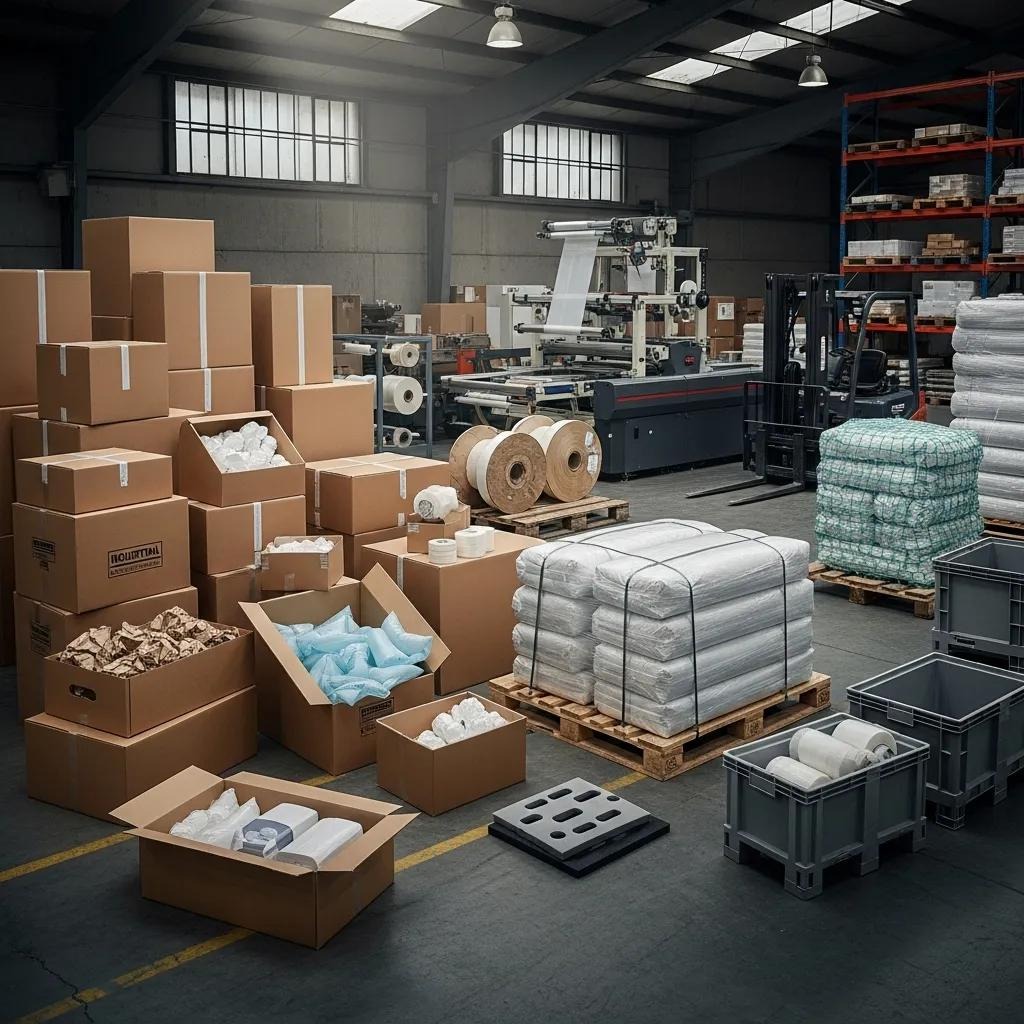
Picking the right industrial packaging and fulfillment partner directly affects your supply chain performance and on-time delivery. As logistics grow more complex and clients expect tailored solutions, knowing what to look for in a fulfillment provider helps you run operations more efficiently. This guide covers the practical factors you should weigh — requirements, costs, and how technology shapes modern fulfillment — so you can choose a partner that fits your goals and your customers’ expectations.
What are the key industrial packaging requirements to consider?
When evaluating industrial packaging, focus on a few non-negotiables: material durability, regulatory compliance, and the ability to tailor solutions for specific products. Together, these elements protect goods in transit and support consistent brand presentation.
How does custom packaging enhance product protection and branding?
Custom packaging is designed for the realities of your shipment profile. The right cushioning and structure reduce damage risk, helping products arrive in showroom condition. At the same time, packaging is a direct touchpoint with customers — thoughtful design and consistent branding turn unboxing into a positive brand experience that supports loyalty.
Which packaging logistics management practices ensure efficient fulfillment?
Reliable fulfillment depends on strong logistics practices: accurate inventory control, smart routing, and systems that provide real-time visibility. Implementing these tactics reduces delays, cuts costs, and raises service levels. Companies that adopt modern logistics methods routinely report faster deliveries and better customer feedback.
How to evaluate and select the right packaging fulfillment company?
Choosing a fulfillment partner means assessing experience, service scope, and customer feedback. Also review their quality controls and how they handle customer support — you want a provider whose processes and service standards match your operational needs.
What criteria define reliable custom packaging services?
Quality assurance processes: Clear checks and documentation that packaging complies with industry standards and regulations.
Customer service standards: Responsive support and transparent communication throughout the fulfillment lifecycle.
Flexibility and scalability: The capacity to adapt production and fulfillment as volumes or product lines change.
How do order processing and shipping capabilities impact fulfillment quality?
Order processing and shipping are core to fulfillment performance. Accurate picking, efficient packing workflows, and reliable carrier integrations drive metrics like order accuracy and delivery speed. Providers that prioritize these functions see fewer errors, faster turnaround, and higher repeat business.
What are the cost factors and benefits of outsourced packaging fulfillment?
Outsourcing packaging and fulfillment can reduce overhead and improve throughput. Specialized providers bring equipment, software, and process know-how that cut internal costs and let your team focus on product and growth instead of logistics.
How does packaging fulfillment outsourcing optimize supply chain costs?
Outsourcing helps control supply chain costs by removing the need for in-house space, labor, and capital equipment. Typical benefits include:
Reduction in overhead costs: Lower expenses for labor, storage, and equipment investment.
Improved efficiency: Streamlined workflows through dedicated fulfillment technologies.
Access to expertise: Operational insights and best practices from specialists who manage fulfillment daily.
Industry research supports outsourcing as an effective strategy for reducing costs and improving operational efficiency.
Outsourcing & supply chain optimization for cost-effective fulfillment
This study frames outsourcing as a decision-driven approach to manufacturing and logistics, proposing a model and mathematical framework for allocating outsourced processes. It shows how procurement choices and supplier selection can reduce costs when blending technologies and highlights outsourcing as a valuable cost-management tool.
Supply chain optimization of outsourced blending technologies, T Bányai, 2017
What are the advantages of integrating commercial printing with fulfillment services?
Combining commercial printing with fulfillment delivers operational and brand advantages, including:
Streamlined processes: One vendor for printing and fulfillment reduces handoffs and simplifies logistics.
Enhanced branding opportunities: On-demand printed packaging and inserts keep brand messaging consistent and timely.
Cost efficiency: Bundled services often cost less than coordinating separate providers.
How are technology and sustainability shaping industrial packaging fulfillment?
Automation, data, and sustainable material choices are changing how fulfillment operates. Technology increases speed and accuracy, while sustainable approaches reduce waste and meet growing regulatory and customer expectations.
What role do automation and AI play in packaging fulfillment efficiency?
Automation and AI speed up operations, cut manual errors, and improve inventory accuracy. Automated sorting and packing reduce cycle times, while machine learning helps forecast demand and optimize workflows. Businesses that integrate these tools typically see measurable gains in throughput and customer satisfaction.
Across the industry, AI and machine learning are becoming essential tools for streamlining packaging and supply-chain processes.
AI & ML for packaging fulfillment efficiency
Manual packaging and supply-chain operations are often slow and inconsistent. Applying AI, machine learning, and deep learning to packaging and operational workflows significantly improves efficiency and standardization. This review summarizes key approaches and outcomes from adapting these technologies in packaging operations.
Packaging 4.0:
Artificial intelligence and machine learning applications in the food packaging industry, L Kumar, 2025
Why is sustainable packaging important for modern fulfillment solutions?
Sustainable packaging matters because customers and regulators expect it. Choosing recyclable materials and designing to reduce waste improves brand perception and can lower material and disposal costs — a practical win for the environment and your margins.
Cost Factor
Description
Impact
Labor costs
Expenses associated with staffing fulfillment operations
High
Material costs
Expenses for packaging materials used across fulfillment
Medium
Technology investment
Spending on automation, software, and integration tools
High
This table highlights the main cost drivers in packaging fulfillment and how they typically affect overall expenses.
To explore practical options and provider capabilities, consider reviewing fulfillment services offered by industry leaders.
In short, choosing the right industrial packaging fulfillment partner means balancing protection, cost, and capability. Focus on proven processes, the right technology mix, and sustainable choices to improve efficiency and customer satisfaction while navigating today’s complex logistics landscape.
Choosing the right fulfillment service provider for packaging is crucial for businesses looking to streamline their operations and enhance customer satisfaction. With a myriad of options available, understanding the key factors that influence this decision can significantly impact your supply chain efficiency. This article will explore essential criteria for selecting a packaging fulfillment provider, the role of technology and automation, cost factors, and the importance of sustainability in fulfillment services. By the end, you will have a comprehensive understanding of what to consider when evaluating potential partners in your packaging and distribution needs.
What Are the Essential Criteria for Selecting a Packaging Fulfillment Provider?
When selecting a packaging fulfillment provider, several essential criteria must be evaluated to ensure that the chosen partner aligns with your business needs. Key factors include experience, reliability, and customization capabilities. These elements play a significant role in determining the effectiveness of the fulfillment process and the overall satisfaction of your customers.
How to Evaluate Experience and Reliability in Fulfillment Companies
Evaluating the experience and reliability of fulfillment companies involves examining their track record and customer testimonials. Look for providers with a proven history of successful partnerships and positive feedback from clients. Metrics such as order accuracy rates, on-time delivery percentages, and the ability to handle peak seasons are critical indicators of a provider’s reliability. Additionally, industry reputation can provide insights into the company’s operational standards and customer service quality. Consulting third-party reviews and industry awards can further validate a provider’s credibility and performance.
Why Packaging Customization Capabilities Matter in Provider Selection
Customization capabilities are vital when selecting a fulfillment provider, as they allow businesses to tailor packaging solutions to meet specific branding and product requirements. Providers that offer a range of customization options, such as bespoke packaging designs and flexible order sizes, can significantly enhance your brand’s visibility and customer experience. This flexibility is particularly important for businesses that require unique packaging solutions to differentiate themselves in a competitive market. Moreover, providers with advanced customization technology can ensure consistency and scalability in packaging design, which is essential for brand integrity.
How Does Technology and Automation Enhance Packaging Fulfillment Services?
Technology and automation are transforming the landscape of packaging fulfillment services, offering significant improvements in efficiency and accuracy. By leveraging advanced systems, fulfillment providers can streamline operations, reduce errors, and enhance overall service delivery.
What Role Does Automation Play in Order Processing and Packaging?
Automation plays a crucial role in order processing and packaging by increasing the speed and accuracy of operations. Automated systems can handle tasks such as inventory management, order picking, and packing with minimal human intervention. This not only speeds up the fulfillment process but also reduces the likelihood of errors, leading to higher customer satisfaction. For instance, automated packing machines can ensure that products are packaged consistently and securely, minimizing damage during transit. Integration of AI and machine learning further optimizes workflow by predicting demand and adjusting processes accordingly.
How Do Tracking Systems Improve Distribution Logistics?
Tracking systems are essential for improving distribution logistics by providing real-time visibility into the supply chain. These systems allow businesses and customers to monitor the status of shipments, enhancing transparency and trust. With accurate tracking information, companies can proactively address potential delays and improve communication with customers, ultimately leading to a better overall experience. Advanced tracking technologies, such as RFID and IoT sensors, enable granular monitoring of package conditions, ensuring quality control throughout transit.
What Are the Cost Factors and Pricing Models in Packaging Fulfillment?
Understanding the cost factors and pricing models associated with packaging fulfillment is critical for businesses looking to optimize their budgets. Different providers may offer various pricing structures, which can significantly impact overall costs.
How to Understand Pricing Structures and Fees for Fulfillment Services
Pricing structures for fulfillment services can vary widely, often including fees for storage, order processing, and shipping. It’s essential to understand these components to accurately assess the total cost of services. Some providers may offer flat-rate pricing, while others may charge based on the volume of orders or specific services utilized. Being aware of potential hidden costs, such as additional fees for special handling or expedited shipping, can help businesses make informed decisions. Requesting detailed quotes and service level agreements (SLAs) can provide clarity and prevent unexpected expenses.
What Are the Benefits of Outsourcing Packaging Fulfillment?
Outsourcing packaging fulfillment offers several advantages, including cost savings, access to expertise, and scalability. By partnering with a specialized provider, businesses can focus on their core operations while leveraging the provider’s knowledge and resources. This can lead to improved efficiency and the ability to scale operations quickly in response to market demands. Additionally, outsourcing can reduce overhead costs associated with maintaining in-house fulfillment capabilities. Expert providers often have established networks and technology that enhance delivery speed and accuracy, further benefiting your business.
Why Is Sustainability Important When Choosing a Packaging Fulfillment Provider?
Sustainability has become a critical consideration for businesses when selecting a packaging fulfillment provider. As consumers increasingly prioritize eco-friendly practices, partnering with a provider that shares these values can enhance brand reputation and customer loyalty.
How Do Eco-Friendly Materials Impact Packaging Fulfillment?
Using eco-friendly materials in packaging fulfillment can significantly reduce environmental impact and appeal to environmentally conscious consumers. Providers that utilize sustainable materials, such as recycled or biodegradable packaging, contribute to waste reduction and promote a positive brand image. This commitment to sustainability can also align with corporate social responsibility goals, further enhancing a company’s reputation in the marketplace. Leading providers often invest in research and development to innovate sustainable packaging solutions that do not compromise product protection or customer experience.
Implementing sustainable practices often involves a comprehensive approach to logistics, as highlighted by research into sustainable packaging logistics.
Sustainable Packaging Logistics for Supply Chain Efficiency
Further actions to improve overall supply chain efficiency and sustainability. Therefore, what follows is a plan established to implement “sustainable packaging logistics”.
What Certifications and Compliance Should Providers Have?
When evaluating potential fulfillment providers, it’s essential to consider their certifications and compliance with industry standards. Certifications related to sustainability, such as FSC (Forest Stewardship Council) certification for paper products, can indicate a provider’s commitment to environmentally responsible practices. Additionally, compliance with regulations regarding packaging materials and waste management is crucial for ensuring that your business adheres to legal requirements and industry best practices. Providers with ISO 14001 certification demonstrate effective environmental management systems, further assuring their dedication to sustainability.
Pricing Model
Description
Implications
Flat-rate Pricing
A fixed fee for services regardless of order volume
Simplifies budgeting but may not be cost-effective for low-volume businesses
Per-order Pricing
Charges based on the number of orders processed
Can be beneficial for businesses with fluctuating order volumes
Tiered Pricing
Different rates based on order volume thresholds
Encourages higher order volumes but may complicate budgeting
Understanding these pricing models can help businesses choose the most suitable fulfillment provider based on their specific needs and budget constraints.
In conclusion, selecting the right fulfillment service provider for packaging involves careful consideration of various factors, including experience, technology integration, cost structures, and sustainability practices. By prioritizing these elements, businesses can enhance their operational efficiency and customer satisfaction, ultimately leading to greater success in the competitive marketplace.
Choosing the right commercial printing partner is crucial for businesses looking to produce high-quality printed materials. The selection process can significantly impact the quality of your marketing materials, product packaging, and overall brand image. This guide will help you understand the essential factors to consider when selecting a commercial printer, ensuring you make an informed decision that aligns with your business needs. We will explore key evaluation criteria, best practices for printer assessment, and common pitfalls to avoid during the selection process. By the end of this article, you will be equipped with the knowledge to choose a printing partner that meets your specific requirements.
What Are the Essential Factors for Selecting a Commercial Printer?
When selecting a commercial printer, several key factors should guide your decision-making process. These factors include the quality of printing, the capabilities of the printer, and the reputation and reliability of the printing service provider. Understanding these elements will help you identify a partner that can deliver the results you need.
Beyond technical capabilities, the character and commitment of a printing partner are also vital for a successful collaboration.
Key Qualities for Commercial Printing Partners
six expert participants in the US commercial printing industry with broad-based business partners, they should seek qualities that build on character and integrity, commitment from top
Factors for Successful Strategic Alliances Among Midsize Commercial Printing Companies, 2007
How to Evaluate Printing Quality and Capabilities
Evaluating printing quality and capabilities involves assessing various aspects of the printing process. Key metrics to consider include:
Types of Printing Technologies: Different printers utilize various technologies, such as digital printing, offset printing, and large format printing. Each technology has its strengths and is suited for specific applications.
Sample Evaluations: Requesting samples of previous work can provide insight into the printer’s quality. Look for consistency in color, clarity, and overall finish.
Customer Feedback: Reviews and testimonials from previous clients can offer valuable information about the printer’s reliability and service quality.
When considering different printing technologies, it’s important to be aware of common quality issues and the need for robust quality assurance procedures.
Digital & Offset Print Quality Assurance
Using an Internet-based industry survey, the differences and similarities of offset and digital print demerits within the print industry are examined. Running parallel to this examination is a look at the extent to which demerit-based quality assurance procedures exist within the printing industry. The survey findings indicate that offset and digital printing processes share common color-related print demerits.
A survey of digital and offset print quality issues, 2007
By focusing on these evaluation methods, you can ensure that the printer you choose meets your quality standards.
Furthermore, a deeper technical assessment of print quality often involves complex image metrics, which require careful application.
Evaluating Print Quality with Image Metrics
quality attributes as suitable for image quality evaluation. The process of applying image quality metrics to printed images is not straightforward, because image quality metrics require a
Image quality metrics for the evaluation of print quality, M Pedersen, 2011
How to Assess Printing Service Providers Effectively?
Assessing potential printing service providers requires a structured approach. This involves asking the right questions and comparing their offerings to find the best fit for your needs.
What Questions Should You Ask Potential Print Partners?
When evaluating potential print partners, consider asking the following questions:
What are your printing capabilities? Understanding the range of services offered can help you determine if they can meet your specific needs.
What is your pricing structure? Inquire about pricing models and any additional costs that may arise during the printing process.
What are your turnaround times? Knowing how quickly a printer can deliver your order is crucial for meeting deadlines.
These questions will help you gauge the printer’s suitability for your project.
How to Compare Pricing and Turnaround Times
Comparing pricing and turnaround times is essential for making an informed decision. Consider the following factors:
Factors Affecting Pricing: Understand what influences the cost of printing, such as materials, complexity of the project, and volume.
Importance of Turnaround Times: Timeliness is critical in the printing industry. Ensure that the printer can meet your deadlines without compromising quality.
How to Negotiate: Don’t hesitate to negotiate pricing and terms. Many printers are willing to work with you to find a mutually beneficial agreement.
By carefully comparing these aspects, you can select a printing partner that aligns with your budget and timeline.
What Are the Best Practices for Printer Evaluation?
To ensure a thorough evaluation of potential printers, follow these best practices. These practices will help you make a well-informed decision.
How to Verify Certifications and Industry Experience
Verifying certifications and industry experience is vital in selecting a reliable printing partner. Consider the following:
Types of Certifications: Look for printers with industry-recognized certifications, such as ISO 9001, which indicates a commitment to quality management.
Industry Standards: Ensure that the printer adheres to industry standards for quality and safety.
Experience Metrics: Assess the printer’s experience in your specific industry to ensure they understand your unique requirements.
These verification steps will help you identify a trustworthy printing partner.
Why Is Customer Service Important in Choosing a Print Partner?
Customer service plays a crucial role in the printing process. A printer with excellent customer service can make your experience smoother and more efficient. Consider these factors:
Impact on Project Success: Good communication and support can significantly affect the outcome of your project.
Communication Importance: Ensure that the printer is responsive and willing to address your concerns throughout the process.
Support During the Process: A reliable printer should provide assistance from the initial consultation to the final delivery.
Prioritizing customer service will enhance your overall experience with the printing partner.
How to Choose a Print Partner That Aligns with Your Business Needs?
Choosing a print partner that aligns with your business needs involves understanding your specific requirements and evaluating how potential printers can meet them.
What Printing Technologies and Services Should You Consider?
When selecting a printing partner, consider the following technologies and services:
Types of Printing Technologies: Evaluate the technologies offered, such as digital, offset, and large format printing, to determine which best suits your needs.
Service Offerings: Look for additional services, such as bindery and mailing services, that can streamline your project.
Customization Options: Ensure that the printer can accommodate any specific customization requests you may have.
By considering these factors, you can select a printer that meets your unique business needs.
How to Ensure Scalability and Flexibility in Your Print Partner
Scalability and flexibility are essential for businesses that anticipate growth or changing needs. Consider the following:
Scalability Considerations: Choose a printer that can handle increased volumes as your business grows.
Flexibility in Service Delivery: Ensure that the printer can adapt to your changing requirements, whether it’s adjusting timelines or accommodating new projects.
Long-term Partnership Benefits: A printer that can grow with your business will provide long-term value and support.
By prioritizing scalability and flexibility, you can establish a productive partnership with your print provider.
What Are Common Mistakes to Avoid When Selecting a Commercial Printer?
Avoiding common pitfalls during the printer selection process can save you time and resources. Here are some mistakes to watch out for:
How to Avoid Hidden Costs and Quality Issues
Hidden costs and quality issues can arise if you’re not careful. To avoid these problems:
Understanding Pricing Structures: Ensure you have a clear understanding of the pricing model and any potential additional costs.
Importance of Detailed Quotes: Request detailed quotes that outline all costs associated with your project.
Negotiation Tips: Don’t hesitate to negotiate terms to ensure transparency and fairness.
By being proactive, you can mitigate the risk of unexpected expenses and quality concerns.
Why Rushing the Printer Selection Process Can Be Risky
Rushing the printer selection process can lead to poor decisions. Consider the following:
Consequences of Rushed Decisions: Hasty choices may result in selecting a printer that doesn’t meet your needs.
Importance of Thorough Research: Take the time to research potential partners and evaluate their capabilities.
Long-term Impacts: A poor choice can have lasting effects on your brand’s image and marketing efforts.
By allowing adequate time for the selection process, you can make a more informed decision.
Factor
Description
Importance
Quality of Printing
Assess the quality of samples and previous work
High
Capabilities
Understand the range of services offered
High
Reputation
Research customer feedback and reviews
High
Printing Technology
Description
Best Use
Digital Printing
Ideal for short runs and quick turnaround
Marketing materials, short-run projects
Offset Printing
Best for high-volume projects with consistent quality
Brochures, catalogs, large volume print jobs
Large Format Printing
Suitable for banners and signage
Trade shows, events, outdoor advertising
Choosing the right commercial printing partner is a critical decision that can significantly impact your business. By understanding the essential factors, assessing potential providers effectively, and avoiding common mistakes, you can ensure a successful partnership that meets your printing needs.
Offset printing is a widely used printing technique that offers numerous advantages for commercial projects. This article explores the key benefits of offset printing, including its superior quality, consistency, and cost-efficiency. Readers will learn how offset printing stands out in the printing industry, particularly for high-volume runs, and why it remains a preferred choice for businesses seeking reliable print solutions. Many companies face challenges in achieving high-quality prints while managing costs effectively. Offset printing provides a solution by combining advanced technology with traditional craftsmanship, ensuring that businesses can produce exceptional printed materials without breaking the bank.
This article will cover the advantages of offset printing, its role in maintaining color consistency, its cost-effectiveness, the materials it can accommodate, and how Walton Press, Inc. ensures quality and value in its offset printing services.
What Are the Key Advantages of Offset Printing for Commercial Projects?
Offset printing offers several key advantages that make it an ideal choice for commercial projects. This printing method is known for its high-quality output, cost-effectiveness for large runs, and versatility in materials.
Indeed, research consistently highlights offset printing’s effectiveness in delivering high-quality, high-volume, and cost-efficient production.
How Does Offset Printing Deliver Superior Print Quality?
Offset printing delivers superior print quality through its ability to produce sharp images and fine details. The process uses printing plates that transfer ink onto a rubber blanket, which then transfers the ink onto the substrate, allowing for precise color reproduction and high resolution. This method ensures that colors are vibrant and consistent across multiple prints, making it suitable for projects that require exceptional quality, such as brochures, magazines, and packaging. The use of high-quality inks and advanced printing technology further enhances the overall print quality, making offset printing a preferred choice for businesses that prioritize excellence in their printed materials.
Further advancements in printing technology, including specialized ink systems, continue to push the boundaries of offset print quality, offering an even wider color gamut and finer detail.
Enhance Offset Print Quality: Wider Color Gamut & Reduced Graininess
These extra color stations can be used to improve image quality by increasing the color gamut, decreasing graininess, reducing illumination sensitivity, or adding special effects to the printed output. The HP IndiChrome Pantone® certified ink mixing system is one key enabler of these improvements, allowing customers to create Pantone® or custom-matched spot colors at their own site.
Digital Offset Printing–Going Beyond 4 Colors, 2006
Why Is Offset Printing Ideal for High-Volume Runs?
Offset printing is particularly ideal for high-volume runs due to its efficiency and cost-effectiveness. The initial setup costs for offset printing can be higher than digital printing; however, once the setup is complete, the cost per unit decreases significantly as the volume increases. This is because the same printing plates can be used for large quantities, allowing for faster production speeds. Many businesses find that offset printing becomes more economical for projects requiring thousands of copies, making it a smart choice for large-scale printing needs.
How Does Offset Printing Ensure Consistent Color Across Large Print Runs?
One of the standout features of offset printing is its ability to maintain consistent color across large print runs. This consistency is crucial for businesses that rely on brand identity and color fidelity in their marketing materials.
What Role Does the Pantone Matching System Play in Color Accuracy?
The Pantone Matching System (PMS) plays a vital role in ensuring color accuracy in offset printing. PMS provides a standardized color matching system that allows printers to reproduce specific colors consistently. By using PMS, businesses can ensure that their brand colors are accurately represented in all printed materials, regardless of the print run size. This system is particularly beneficial for companies that require precise color matching for their logos and branding elements.
Indeed, specialized printing techniques, such as those utilizing multi-color presses, are crucial for achieving precise and consistent Pantone color reproduction, meeting both industry standards and client expectations.
How Does Offset Printing Maintain Brand Color Integrity?
Offset printing maintains brand color integrity by utilizing the Pantone Matching System and high-quality inks that are designed to match specific color profiles. This ensures that the colors remain consistent across different print jobs and materials. Many well-known brands rely on offset printing to uphold their visual identity, as it allows them to produce marketing materials that reflect their brand accurately. By adhering to strict color guidelines, offset printing helps businesses maintain their brand’s reputation and recognition in the market.
Why Is Offset Printing Cost-Efficient for Large Print Volumes?
Offset printing is recognized for its cost-efficiency, especially when it comes to large print volumes. The economies of scale associated with this printing method make it a financially viable option for businesses.
How Do Economies of Scale Reduce Per-Unit Printing Costs?
Economies of scale play a significant role in reducing per-unit printing costs in offset printing. As the quantity of printed materials increases, the fixed costs associated with setup and production are spread over a larger number of units. This results in a lower cost per unit, making offset printing an attractive option for businesses looking to produce large quantities of printed materials without incurring excessive costs. For example, a print run of 10,000 brochures will have a significantly lower cost per brochure compared to a run of just 500.
When Is Offset Printing More Affordable Than Digital Printing?
Offset printing becomes more affordable than digital printing when producing large quantities. While digital printing is cost-effective for small runs due to its lower setup costs, offset printing shines in high-volume scenarios. Businesses that require thousands of copies will find that offset printing offers better pricing and quality, making it the preferred choice for bulk printing projects. This cost advantage, combined with the superior quality of offset printing, makes it a compelling option for many commercial applications.
What Materials and Finishes Can Offset Printing Accommodate?
Offset printing is versatile in terms of the materials and finishes it can accommodate. This flexibility allows businesses to choose from a wide range of substrates and finishing options to suit their specific needs.
Which Substrates Are Compatible with Offset Printing?
Offset printing can accommodate various substrates, including paper, cardboard, and specialty materials. Common paper types used in offset printing include coated and uncoated stocks, which can be selected based on the desired finish and application. Additionally, offset printing can handle thicker materials, making it suitable for packaging and promotional items. This versatility enables businesses to create a diverse array of printed products, from business cards to high-quality packaging.
How Does Material Versatility Enhance Print Applications?
The material versatility of offset printing enhances print applications by allowing for customization and creativity in design. Businesses can choose different substrates and finishes to achieve the desired look and feel for their printed materials. For instance, using a glossy finish on a brochure can make colors pop, while a matte finish can convey a more sophisticated appearance. This adaptability enables companies to tailor their printed products to their target audience and branding requirements, ultimately enhancing their marketing efforts.
How Does Walton Press Ensure Quality, Consistency, and Value in Offset Printing?
Walton Press, Inc. is committed to delivering quality, consistency, and value in its offset printing services. With a focus on craftsmanship and modern technology, the company ensures that every print job meets the highest standards.
What Expertise Does Walton Press Bring to Offset Printing Projects?
Walton Press brings decades of experience and expertise to offset printing projects. The team is skilled in various printing techniques and understands the nuances of different substrates and inks. This knowledge allows them to provide tailored solutions that meet the specific needs of each client. By leveraging advanced printing technology and maintaining strict quality control measures, Walton Press ensures that every project is executed with precision and care.
How Does Walton Press Guarantee Reliable Turnaround and Quality Assurance?
Walton Press guarantees reliable turnaround times and quality assurance through its streamlined production processes and commitment to customer satisfaction. The company employs rigorous quality checks at every stage of production, ensuring that the final product meets the client’s expectations. By prioritizing efficiency and quality, Walton Press has established itself as a trusted partner for businesses seeking reliable offset printing solutions.
What Are the Industry Applications and Trends Driving Offset Printing Demand?
Offset printing continues to be in demand across various industries due to its unique advantages and adaptability. Understanding the applications and trends driving this demand can help businesses make informed decisions about their printing needs.
How Is Offset Printing Used in Publishing, Packaging, and Direct Mail?
Offset printing is widely used in publishing, packaging, and direct mail applications. In publishing, it is the preferred method for producing books, magazines, and catalogs, where high-quality images and text are essential. For packaging, offset printing allows for vibrant graphics and precise color matching, making it ideal for product packaging. Additionally, direct mail campaigns benefit from offset printing’s ability to produce large quantities of materials efficiently, helping businesses reach their target audiences effectively.
What Are the Emerging Sustainability Practices in Offset Printing?
Emerging sustainability practices in offset printing focus on reducing environmental impact through eco-friendly inks, sustainable substrates, and efficient production processes. Many offset printers are adopting vegetable-based or soy-based inks and recycled materials to minimize their carbon footprint. Additionally, advancements in technology are enabling printers to reduce waste and energy consumption during production. As sustainability becomes increasingly important to consumers, offset printing companies that embrace these practices will be better positioned to meet market demands and attract environmentally conscious clients.
Printing Method
Key Advantage
Ideal Use Case
Offset Printing
High-quality output
Large volume projects
Digital Printing
Quick turnaround
Short runs and customization
Flexographic Printing
Versatile for packaging
Labels and flexible packaging
The comparison of printing methods highlights the unique advantages of offset printing, particularly for businesses that require high-quality, large-volume print solutions. Understanding these differences can help companies choose the right printing method for their specific needs.
USPS 2025-2026 Promotions offer 2–5% postage discounts for mailers who use innovative print and digital features, helping businesses and nonprofits offset rising postal rates.
Walton Press simplifies the qualification process through expert guidance, and complete mailing management, ensuring clients capture every available discount.
As a full-service commercial printing and mailing company, Walton Press helps organizations lower mailing costs, meet USPS standards, and run more effective direct mail campaigns.
Postal rates are on the rise again, and for many businesses and nonprofits, those increases can add up quickly. But here’s the good news — the USPS 2025-2026 Promotions Program is offering multiple ways to offset postage costs and make direct mail more affordable. These incentives are designed to encourage innovation, improve engagement, and help mailers deliver better results for less.
For organizations that rely on direct mail—like marketers, publishers, nonprofits, and small businesses—partnering with a full-service printing and mailing provider like Walton Press can make the difference between missing out and maximizing every discount available.
Let’s explore how USPS promotions work, what’s new, and how Walton Press helps you qualify for postage savings while simplifying the entire process.
Understanding USPS Promotions
The USPS Promotions Program is designed to encourage mailers to try new formats, technologies, and creative strategies in their print campaigns. In return, USPS offers temporary postage discounts — usually between 2% and 5% — to businesses that participate.
These savings may sound modest, but they can be significant when you’re mailing thousands of pieces. For many organizations, participating in even one or two promotions each year can reduce overall postage expenses by thousands of dollars.
For 2025-2026, USPS has continued several of its most popular promotions, including:
Tactile, Sensory, and Interactive Mailpiece Engagement: Encourages the use of specialty inks, finishes, and papers that make mail more engaging.
Informed Delivery®: Offers discounts for integrating digital previews with physical mail.
Emerging and Advanced Technology: Rewards mailers who incorporate AR, VR, or NFC into campaigns.
Personalized Color Transpromo: Supports organizations using color and personalization in transactional mail.
Reply Mail IMbA™: Provides incentives for using Intelligent Mail barcode accounting.
You can view the full list and eligibility details on the official USPS Promotions page.
Why USPS Promotions Matter in 2025-2026
Postage costs have continued to climb as USPS adjusts rates to meet operational demands and inflation. For mailers, that means every discount opportunity is critical.
These promotions not only reduce expenses but also improve campaign effectiveness. By trying new print technologies or integrating mail with digital tools, businesses can increase engagement, track responses, and strengthen brand recall — all while spending less per piece.
However, taking advantage of these programs isn’t always straightforward. Each promotion comes with specific rules, submission requirements, and timelines. That’s where Walton Press comes in.
How Walton Press Simplifies USPS Discount Qualification
As a full-service commercial printing and mailing company, Walton Press helps you navigate every step of the USPS promotions process. Our team understands the technical requirements, file preparation, and documentation USPS requires for approval.
Here’s how we help you qualify for maximum postage savings:
1. Expert Guidance on USPS Promotions
Our marketing mail specialists stay up to date with the latest USPS promotions and deadlines. We evaluate which programs best fit your marketing goals and mail type, whether you’re running a nonprofit appeal, magazine circulation, or retail campaign.
We don’t just print — we advise. That means helping you choose coatings, inks, or features that qualify for tactile promotions, or integrating digital elements that unlock Informed Delivery discounts.
2. Complete Mailing and Logistics Management
Getting a discount isn’t just about design; it’s also about execution. Walton Press manages data processing, address verification, presorting, and drop-shipping to USPS facilities.
We ensure that your mail qualifies for automation discounts and postal promotions simultaneously, helping you save even more. Whether you’re sending 5,000 postcards or 500,000 catalogs, we make sure every piece ships efficiently and accurately.
3. Mailing Services for Nonprofits
Nonprofit organizations face unique mailing challenges—from budget constraints to changing postal rules. Walton Press provides mailing services tailored for nonprofits, ensuring compliance with USPS Nonprofit Authorization rules and integrating promotional discounts to stretch your resources further.
Our team helps nonprofits qualify for reduced postage rates while keeping campaigns professional and donor-focused.
4. Transparent Cost Analysis and Savings Reports
Understanding where your postage dollars go helps you plan smarter campaigns. Walton Press provides clear cost breakdowns and identifies where USPS incentives can make the biggest impact.
From project estimates to final mailing invoices, you’ll always know how promotions and presorting are helping you save.
Examples of USPS Promotions Walton Press Can Help You With
Tactile, Sensory, and Interactive Promotion
Add specialty textures, coatings, or metallic inks that capture attention—and earn a 5% discount on postage. Walton Press’s printing capabilities include specialty finishes that meet USPS guidelines, helping your mail stand out.
Informed Delivery® Promotion
Integrate your printed mail with digital preview emails that reach consumers before their mail arrives. Walton Press helps set up the necessary campaign files so you can enjoy a 4% discount while gaining valuable digital engagement data.
Emerging and Advanced Technology Promotion
Whether you’re using QR codes or augmented reality, we can guide you through the setup and documentation to qualify for these forward-thinking promotions. It’s a great way to modernize your mail strategy while earning additional discounts.
The Walton Press Advantage
Partnering with Walton Press means more than saving on postage—it’s about streamlining your entire direct mail process.
We combine decades of commercial printing experience with mailing expertise to deliver a one-stop solution that’s efficient, reliable, and compliant with USPS standards.
Our clients, from regional nonprofits to national publishers, rely on us because we manage every detail, including:
Prepress and file setup for USPS approval
Data hygiene, address verification, and presorting
Postal documentation and tracking
On-time delivery to designated USPS entry points
With Walton Press, you don’t need to keep up with every USPS rule or rate change. We do it for you—so you can focus on your message, audience, and results.
Maximize Your Direct Mail ROI in 2025-2026
In a competitive marketing environment, every dollar counts. USPS’s 2025-2026 Promotions Program offers real opportunities to reduce costs and increase engagement, but it takes expertise to take full advantage.
Walton Press makes that process seamless, handling the technical side so your marketing team can stay focused on strategy and creativity.
When you combine targeted mailing and USPS discounts, you not only save on postage but also improve overall campaign performance.
Ready to save on postage? Let’s get started! Whether you’re planning a nonprofit fundraiser, a catalog campaign, or a personalized mailer, Walton Press Inc. can help you qualify for USPS promotions and postage savings in 2025-2026. Our full-service approach covers every stage—from printing to mailing and reporting—ensuring your project runs smoothly and delivers measurable results.
Start saving on your next direct mail campaign. Contact us today to discuss your project and discover how our full-service printing and mailing solutions can make your campaigns more cost-effective and impactful.
Joanne Hayes, a 24-year veteran of the publishing industry, started Simply Buckhead Magazine in 2010. She quickly developed the ‘must read’ magazine for the bustling metropolitan area of Atlanta. Over the years, Joanne and Walton Press worked closely together to develop a hybrid style publication specifically targeting her and her advertiser’s needs, using both coated and non-coated papers.
Joanne, how did you get started in publishing?
I started my career in retail sales in 1990, and while managing a clothing store in RI in 1996, was recruited by a customer to interview for a position to start the marketing for a new publication for the award-winning newspaper company, Southern RI Newspapers, in southern RI. I spent 12 years in advertising sales there, before being recruited to help start SO RI Magazine for another award-winning media company, Providence Media. I helped build a very successful advertising base there over 3 years, before moving to Atlanta. My specialty became starting things from scratch, and I parlayed that here in Atlanta.
What is Simply Buckhead Magazine?
Simply Buckhead is an upscale lifestyle magazine in Buckhead, Brookhaven, Dunwoody, Sandy Springs & Chamblee, distributed free in over 350 locations throughout the area eight times a year, plus online virtual reading, with over 103,000 monthly viewers. Simply Buckhead reaches tastemakers ages 24-65 who want to experience the best the area has to offer. From real estate and gardening, to local trends and dining, shopping and the arts, Simply Buckhead is the essential guide to living well in Atlanta, in the best area inside the perimeter.
Joanne, how did you get started in publishing?
I started my career in retail sales in 1990, and while managing a clothing store in RI in 1996, was recruited by a customer to interview for a position to start the marketing for a new publication for the award-winning newspaper company, Southern RI Newspapers, in southern RI. I spent 12 years in advertising sales there, before being recruited to help start SO RI Magazine for another award-winning media company, Providence Media. I helped build a very successful advertising base there over 3 years, before moving to Atlanta. My specialty became starting things from scratch, and I parlayed that here in Atlanta.
What is Simply Buckhead Magazine?
Simply Buckhead is an upscale lifestyle magazine in Buckhead, Brookhaven, Dunwoody, Sandy Springs & Chamblee, distributed free in over 350 locations throughout the area eight times a year, plus online virtual reading, with over 103,000 monthly viewers. Simply Buckhead reaches tastemakers ages 24-65 who want to experience the best the area has to offer. From real estate and gardening, to local trends and dining, shopping and the arts, Simply Buckhead is the essential guide to living well in Atlanta, in the best area inside the perimeter.
Why did you decide to use a combination of coated and non-coated papers?
The format is exactly the same as what we had in Rhode Island for SO RI magazine, and the reason it works so well here also is that the bigger clients who can afford a glossy/larger page will do so, for the premium positioning, and the lower rates we can offer for the non-coated paper allows many more local, independent businesses to be able to afford to advertise in the publication they need to be in most. The non-coated paper we use is not newsprint, rather hi-brite white text stock, twice as heavy as newsprint, so the colors pop and clients are happy, without the expense of a glossy page.
What are some considerations as a publisher you would suggest to others considering this style of publication?
If you are in an upscale community looking to publish something sophisticated, approachable and relatable, and cater to smaller, independent businesses, along with the bigger box retail and services, this is the way to go. There is an ad space that will be affordable for everyone. I’d recommend no more than 55-60% advertising, and really focus on the quality of the editorial, which keeps our clients coming back every year.
About Simply Buckhead:
Simply Buckhead reaches tastemakers ages 24-65 who want to experience the best the area has to offer. 24,000 free copies are distributed throughout the community eight times a year with distribution to more than 350 locations. The magazine format is unique to the Atlanta market with its oversized (10.5″ X 13.5″), glossy covers, and bright white text stock interior. It is sophisticated, yet approachable. Learn more at simplybuckhead.com.
About Walton Press:
Walton Press is a full-service print house with services ranging from consultation and pre-press through printing and finishing. From bound glossy magazines to newsprint, Walton Press has the turn-key solutions for your every printing, advertising and distribution need. Walton Press is committed to excellence in quality, service and dependability. Contact us at waltonpress.com or by phone at: 800-354-0235.
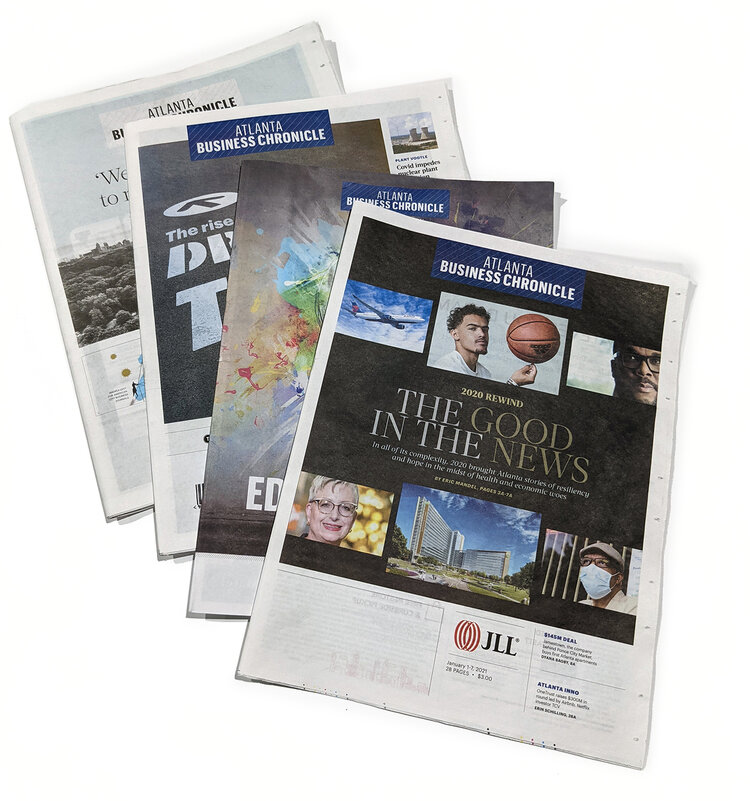
Atlanta Business Chronicle is the #1 source of business news, market trends and opportunities within the Atlanta metro area. With over 40 years of partnership with Walton Press, Atlanta Business Chronicle speaks about integrity, success and evolution.
What are challenges the Atlanta Business Chronicle sees for publishers and printing in the future?
The media industry continues to evolve at a rapid pace, and our continued success hinges on our ability to stay ahead of the changing landscape. We believe that print will always play a role in what we do, but we do expect the Atlanta Business Chronicle print edition of tomorrow to look different than it does today. The greatest challenge we face is how to maintain a successful business model that balances the need for print content, digital content and a robust live event platform. The key to overcoming that challenge is using customer data and analytics to study our readers’ preferences and pivoting to reflect those changing behaviors. We have become much better at analyzing the needs of our readers and that has helped us grow our audience over the past few years.
Atlanta Business Chronicle and Walton Press have been printing and publishing partners for over 40 years. What is important to consider when choosing the right printing partner for long term success?
Over our entire history with Walton Press, Walton has been a partner in every sense of the word. We could not have achieved the success we have without Walton’s consistency and professionalism. We know from talking to other business journals in our 40-publication family that not all printers are created the same. Walton Press truly understands and cares about our business, and when the time comes to move quickly and adapt, Walton Press is always there in lock-step with us. Atlanta Business Chronicle consistently ranks among the best among its peers when our company provides qualitative data on print quality, color and reproduction.
About Atlanta Business Chronicle:
Atlanta Business Chronicle is a primary source of business news and information for the metro-Atlanta and Georgia business community with a mission to help our readers grow their businesses, advance their careers and simplify their professional lives. Our platforms include our weekly print edition, a robust digital presence – website, emails and social media – and an events platform that draws 8,000+ attendees annually. A publication of American City Business Journals, Atlanta Business Chronicle also offers our partners access to the 44 markets we serve nationally. Visit us at atlantabusinesschronicle.com to learn more and subscribe.
About Walton Press:
Walton Press is a full-service print house with services ranging from consultation and pre-press through printing and finishing. From bound glossy magazines to newsprint, Walton Press has the turn-key solutions for your every printing, advertising and distribution need. Walton Press is committed to excellence in quality, service and dependability. Contact us at waltonpress.com or by phone at: 800-354-0235.
Vice President of Print Solutions at Walton Press and 25-year print industry veteran speaks about keeping your options open in a turbulent market.
How did you get started in the print industry, and can you tell us about your career?
I worked for a printing company while I was in college, and actually started in the bindery, sweeping floors and doing odd jobs. I finished school in 1992 with a degree in Printing Management, and then moved to Atlanta where I took a position as an Estimator for a large web/sheetfed company. After a couple of years I became restless and decided I wanted to pursue a career in Sales and Management. I’ve always had a passion for helping others as they faced their challenges in printing and business, and given my experience to that point it was a good fit. 25 years can go by quickly, and I’m still helping clients and enjoying it.
Print is alive and well. What leading factors are contributing to the growth of the print market in 2021 and beyond?
It’s heard often that the need for printing is declining, and in many areas that would be true. What never goes away I suppose is the need for communication. We all share ideas, news, products, services, fashion, music, you name it. So I’ve always thought of printing as another way to communicate, whether that be a magazine, postcard, an ad on the radio, a TV commercial, or a billboard sign. I believe a key to the growth in communication within the printing arena is using all the technologies available appropriately and the most efficient ways possible.
With an unprecedented paper market and supply chain challenges, what are factors do publishers need to consider when working with a printer?
Keep an open mind, understand what printing options are available, and don’t be afraid to use them for what they can achieve. I think we all get locked into thought processes in which we believe things are a certain way now and must always be. I’m not sure if many publishers know how far some of the technologies have advanced in certain areas of printing that could completely change how they can use them. An example would be the high end color reproduction in coldset printing and non-glossy papers. Publishers may be amazed at the quality level that can be achieved and the cost savings available using this technology. Does a magazine have to be all glossy? Maybe not, hybrid publications that utilize gloss and non-gloss paper can be an extremely effective option for many publishers. Opportunities may be in front of publishers if they keep an open mind and embrace what is available to them.
What are the benefits of a ‘hybrid publication’ using a combination of coated and non-coated papers?
Design flexibility and sales opportunity. Hybrid publications give the publisher the ability to offer levels of quality to their advertisers at different price points. Some advertisers may ask for a small, reasonably priced ad positioned on a lower profile page that would be ideal for the non-glossy pages within a hybrid publication. Other high end advertisers may be willing to pay for a 2 page centerspread glossy featured ad and would love to be in that exclusive position in the center of the magazine. Regional publishers could benefit greatly from this strategy, appealing to both types of advertisers. Another advantage could be increased circulation as a result of lower print prices per magazine. Instead of spending dollars on a smaller quantity for an all gloss magazine, publishers can take advantage of the reduced printing cost by adding to their quantity of magazines printed and distributed. Advertisers are attracted by a higher circulation
What are the biggest shifts you have experienced in your career?
Over my 25 year career the biggest changes in printing has been technology. Interestingly, the process of ink printing on paper is still very similar, the actual act of ink being transferred onto paper. But the introduction of computer technology in all areas around press production has had a tremendous impact on how printing is done today. Most processes within the print workflow are much faster: designing, file transfer, platemaking, proofing, scheduling, shipping are all areas that have been transformed from traditional methods to high speed, efficient processes. In addition, print quality has increased significantly with computer accuracy and improvements in equipment. I look forward to seeing advances in all areas and I’m sure I’ll continue to be amazed by what is possible.
About Walton Press:
Walton Press is a full-service print house with services ranging from consultation and pre-press through printing and finishing. From bound glossy magazines to newsprint, Walton Press has the turn-key solutions for your every printing, advertising and distribution need. Walton Press is committed to excellence in quality, service and dependability. Contact us at waltonpress.com or by phone at: 800-354-0235.
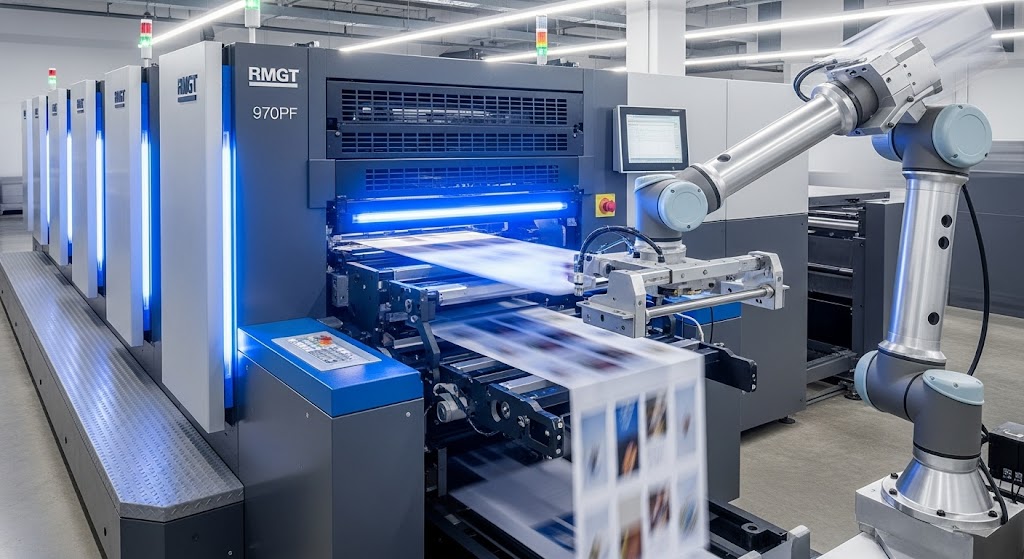
SOLON, OH – May 28, 2024 – Graphco, the Exclusive Distributor for RMGT’s most popular 970, 920 and 790 offset presses throughout the Midwest and Southeast, is please to announce that an 8-UP+ RMGT 970PF-8+LED Long Perfector has been purchased by Monroe, GA based Walton Press. Scheduled for delivery in late July, this 38-inch press which features ASAP (Autonomous Smart Assist Printing) and LED instant-curing technology, will be showcased running live demonstration on the RMGT stand for the 11 days of drupe, the massive Global trade fair held every four years in Düsseldorf, Germany.
The 124-year-old company has roots planted firmly in long-run, heat-set and cold-set web-offset presses that produce in the range of 35,000 copies per hour. For smaller, lower-volume printing jobs, Walton Press has been using a top-of-the-line digital press for several years. However, as the demand for more short-run work continues to increase, technological limitations have impeded productivity. The ability to gang-run jobs is an attractive benefit of the RMGT. “We can run four up on a 25-by-38-inch sheet, compared to only one up now on our digital size sheet,” states Stuart Christian, President of Walton Press, sounding like a kid in a candy shop. “That’s a huge twist since our cost study shows runs as short as 500 sheets are actually produced on the new press more cost-effectively than on our digital.”
“We are excited to get back to offset for shorter print volumes, and of course at 15,000 4/4 sheets per hour the new RMGT meets our medium run length print volume as well,” declares Christian. Situated 45 miles east of Atlanta, the printing firm employs 100 full-time employees who produce a variety of magazines: from newsprint weeklies, such as the Atlanta Business Chronicle (circulation: 23,000), to glossy community titles like Simply Buckhead, an upscale, 96-page lifestyle publication for the ATL metro area (24,000 copies printed eight times per year). Walton operates two to three shifts, five days per week, in its 70,000-square-foot facility. “We run three shifts as needed, and our book of business has been quite large since the end of the pandemic,” Christian reports.
The management team considered investing in another heat-set web press, or a newer model ink-jet device, but decided against both options. The pushback on digital printing was easy to justify, according to Christian, who has been at Walton’s helm for nine years: “Walton Press has reached a pivot point between our high-quality web press [Manroland ROTOMAN] and the digital press [Kodak NexPress] that we are selling.
We feel the sheetfed offset from RMGT will take the [shorter] volumes at a much better price point,” he concludes. “We will also be much more competitive on runs under 20,000 with the sheetfed perfector speeding along at 15,000 sph [sheets per hour], printing double-sided. Ink jet would never meet our customer’s quality expectations, and of course the lower cost of equipment, consumables and traditional paper stock made the RMGT offset solution very attractive.”
In addition, Walton Press just upgraded their bindery with new high-speed saddle binders and perfect binders that will will use the same signature formats that their webs produce. This is another huge advantage to RMGT’s traditional 16-page, 32-page signature format in comparison with ink-jet which typically requires huge additional investments in non-traditional finishing equipment that is typically captive to the short lifespan ink jet machines.
Less paper and more work
Walton Press has opted to add a Quantum Design QRS-106 roll-to-sheet converter to its RMGT sheetfed press. “Adding the roll sheeter just makes sense for us to be able to use the same paper stock, which we buy a lot of now,” explains Christian. With the 970PF, “we also can vary the cutoffs, which we cannot do now,” he adds. The new machine will provide in- house equipment redundancy, “giving us more control to meet customer deadlines,” he says of production support.
The same model RMGT 970PF-8+LED press being exhibited at the PRINTING United Expo last fall in Atlanta caught the attention of Patrick Judge, Walton’s Managing Director of Operations. “It was the only sheetfed press I saw at the show and it really caught our attention,” he recalls. Due to the quick job turnarounds that are rapidly growing within their heat-set-web workflow, he was particularly interested in the LED instant curing component, which is essential to avoid bindery bottlenecks. Plus, the two energy-efficient, LED lamps draw only 75 amps of power in comparison to the Rotoman’s long heat-set tunnel. Faster make ready start-ups are another lure. “Right now, changeovers are our biggest setback,” Judge notes, “causing us to slow down production. And with the new press, we won’t be losing 500 sheets to get up to color.”
Analyzing the numbers, he estimates that Walton will save literally hundreds of tons of paper annually with the new 970PF-8+LED. “We expect to cut waste astronomically,” he says. Obviously, trucking in far fewer tractor-trailer loads of paper is huge from a sustainability standpoint. While acknowledging the RMGT’s attractive price point, Judge adds that substantial paper-waste savings enhance the return-on-investment (ROI) proposition for the new press.
Christian is confident that expanding the firm’s capabilities with the new 38” 4/4 long perfector will attract other types of customers and titles to Walton Press. “We’d like to expand our [product] line-up to include higher quality catalogs and magazines,” he shares, as well as organically enter new markets. For example, Walton presently outsources magazine components, such as inserts. “With this new press, we’ll be able to print and coat a couple hundred thousand high-quality inserts, in different versions, in-house every month rather than outsourcing. In addition, it can handle DAL [direct address label] cards for publishers,” he notes. These products represent entirely new revenue channels for the print service provider.
To help meet Walton customers’ demanding quality expectations, the RMGT press at drupa is demonstrating Autonomous Smart Assist Printing (ASAP), which deploys two cameras to control color, adjust registration and fully inspect every sheet. “This highly intelligent ASAP technology is becoming mainstream as we are now placing these intelligent cameras on many of our customer’s new presses,” believes Chris Manley, President of Graphco. “It brings the ability to evaluate every sheet, and then any non-compliant sheets containing even minute imperfections as small as 1 mm are removed them from the rest of the run. This goes for color fidelity as well, with a Delta E of .01 as the standard.” Judge likens such intense, quality-assurance measures to those seen on the high-speed, roll-to-roll flexographic presses that he employed earlier in his career.
“Graphco is honored to again partner with such a well-established and highly respected company like Walton Press. As we approach our 50th year in business I am more in awe than ever of companies like Walton at 124 years, and Advertisers Printing at 100 years young. Let’s face it, that’s a lot of payrolls to make in a row,” observes Manley, “And for this press to mark our second RMGT Long Perfector to include our roll-to-sheet device tells me that properly done offset printing for publication houses, and other web offset concerns, has a very long runway for sure. And no one can dispute the higher quality and lower cost of this technology versus inkjet, and web printers are accustomed to buying machines that last, so our incredibly durable RMGT platform is a big positive. We are excited to see this press running live in Dusseldorf, and then making its home back in Monroe, Georgia.”
About Graphco
Graphco is the industry’s leading provider of offset, digital and print finishing solutions. We proudly represent the finest brands of equipment including RMGT (Ryobi MHI Graphic Technology), SD-Italy, Foliant, Standard Horizon, Graphic Whizard, Petratto, Spiel Associates/Sterling, MBM, Kodak, Konica Minolta and many more. These brands are only as good as the technical support team that stands behind them, and Graphco’s reputation for top-notch service is second to none. Since 1976, Graphco has thrived in an ever-changing marketplace by loyally adhering to the firm’s original model for success: providing best-in-class print production equipment along with reliable and assured technical service. Learn more about Graphco at www.graphco.com, 800-458-2769.
Copyright 2024. All brand names are the property of their respective owners and may or may not be trademarked.